1955-1970
Written by the Midwest Rail Rangers
E-mail: info@railrangers.org
This article is (c)2019 Midwest Rail Rangers Corporation. Note: Amtrak is a trademark of the National Railroad Passenger Corporation. This website is operated for information purposes only and has no affiliation with Amtrak, or any other organization besides the Midwest Rail Rangers.
Dome cars have their earliest beginnings dating back to the late 19th century. However, these early designs were not successful and it was not until the streamliner era that the car truly came of age. In the mid-1940's Cyrus Osborn, vice president and general manager of General Motors' Electro-Motive Division conceived what he dubbed a Vista Dome car built from a Budd Company coach, which featured a second-floor solarium for an unprecedented 360 degree view of the surrounding landscape. By the 1950's dome cars were all of the rage and almost all named trains across the country carried them.
In the west, virtually every major railroad had its own version of a dome. The Union Pacific operated Domeliners (in which they featured dining services among other things), the Milwaukee Road and Santa Fe Super Domes (the Santa Fe also operated Pleasure Dome lounges and the popular Hi-Level cars on its El Capitan with second floor glass ceilings), the Great Northern Great Domes, and the Northern Pacific's aforementioned Vista-Domes (several eastern and western railroads operated the Budd Company's Vistas).
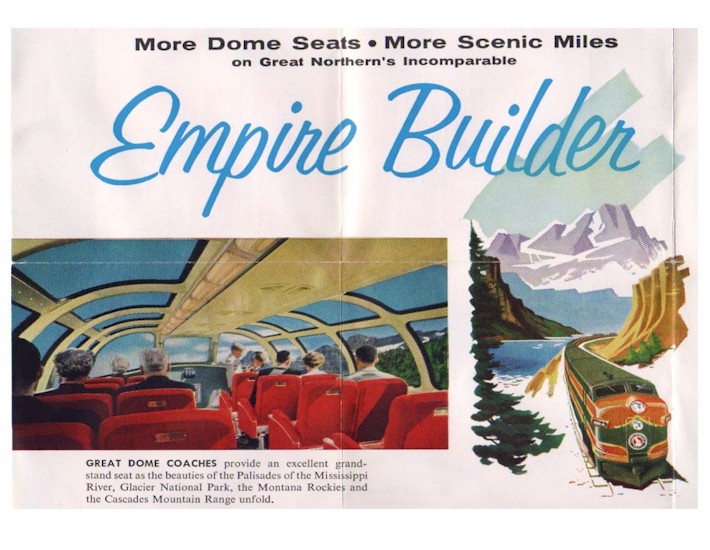
Compared to the Burlington, Santa Fe, and the Milwaukee Road, the Great Northern was slow to adopt dome cars for its passenger trains. Management thought that the cost of heating and cooling the dome interiors would be prohibitively expensive given the hot summers and cold winters along the Hi-Line. Further, they thought the Empire Builder, which had already been re-equipped twice in 1947 and 1951, could attract passengers without adding domes. News that the Northern Pacific Railway and the Milwaukee Road were adding domes to their transcontinental trains changed the Great Northern's mind. In 1953, the Great Northern ordered six Great Domes and sixteen "short" domes, enough to add one Great Dome and three "short" domes to the regular consist of the Empire Builder. One of the six Great Dome cars would be owned by the Chicago, Burlington and Quincy Railroad (CB&Q), while the other five would be owned by the Great Northern. This shared-ownership agreement of the Great Domes was reached because the Empire Builder operated over the CB&Q between Chicago and the Twin Cities, while it operated over the Great Northern from Minnesota to the Northwest.
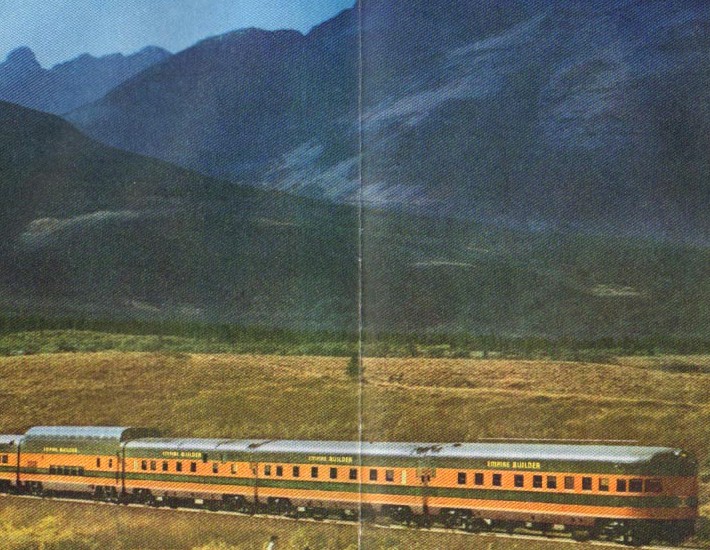
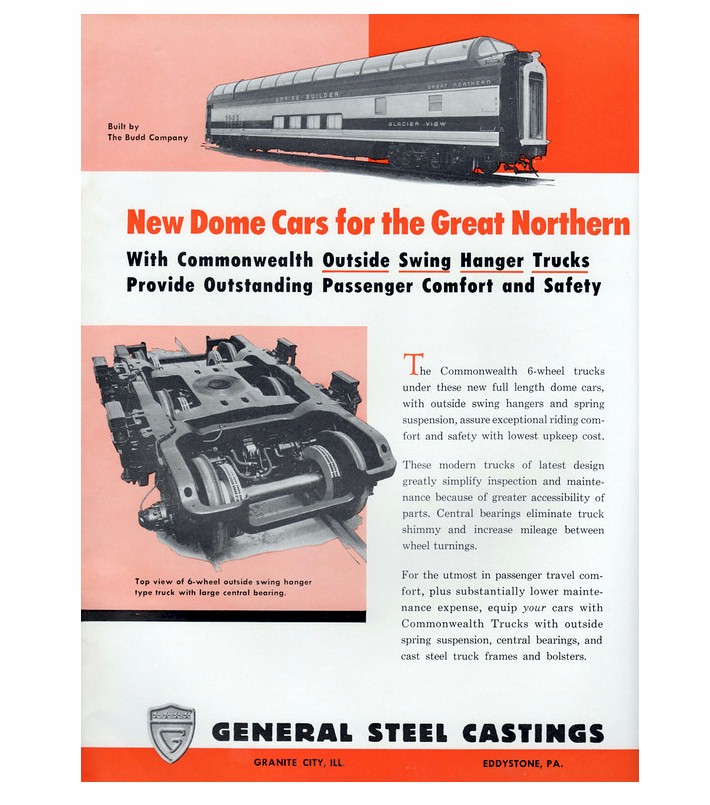
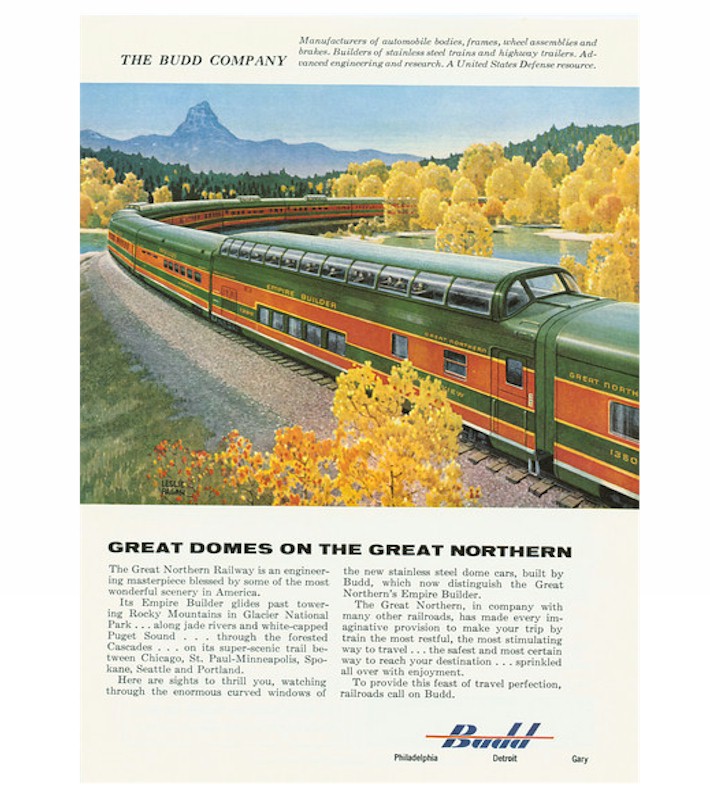
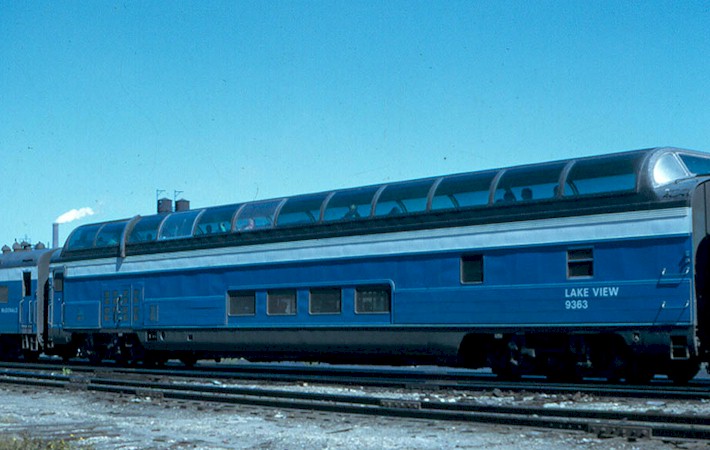
The Great Domes were made by Budd and began running on May 29, 1955. The five Great Domes owned by the Great Northern were named: "Glacier View" (Car #1390), "Ocean View" (Car #1391), "Mountain View" (Car #1392), "Lake View" (Car #1393), and "Prairie View" (Car #1394). The lone Great Dome owned by the CB&Q was named "River View" (Car #1395).
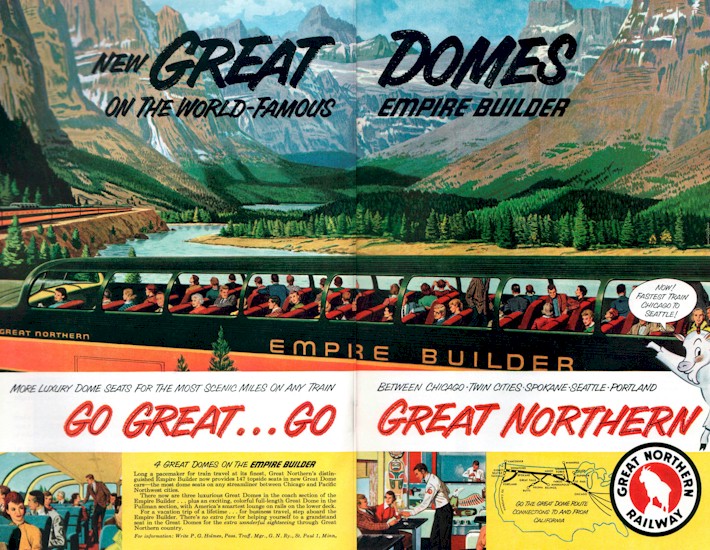
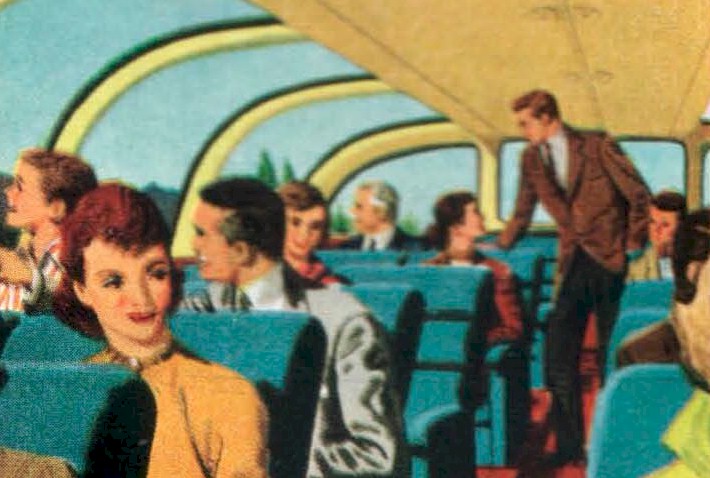
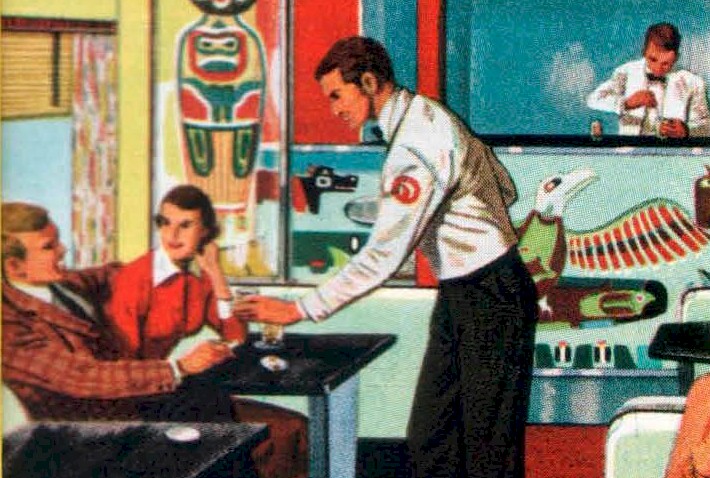
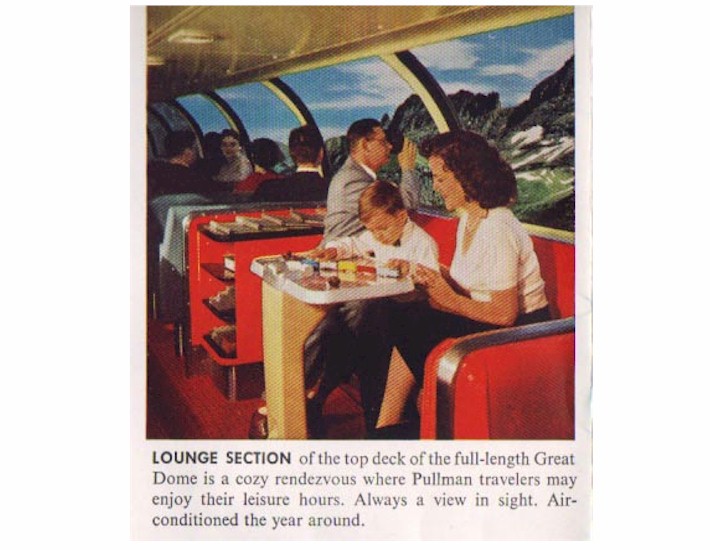
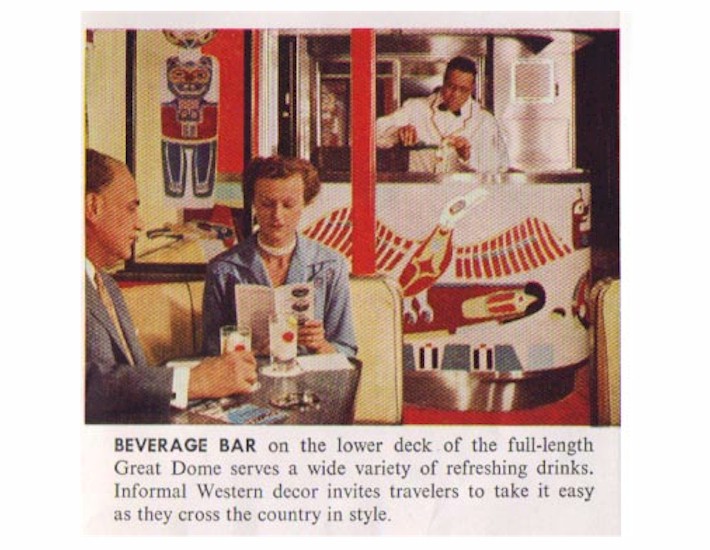
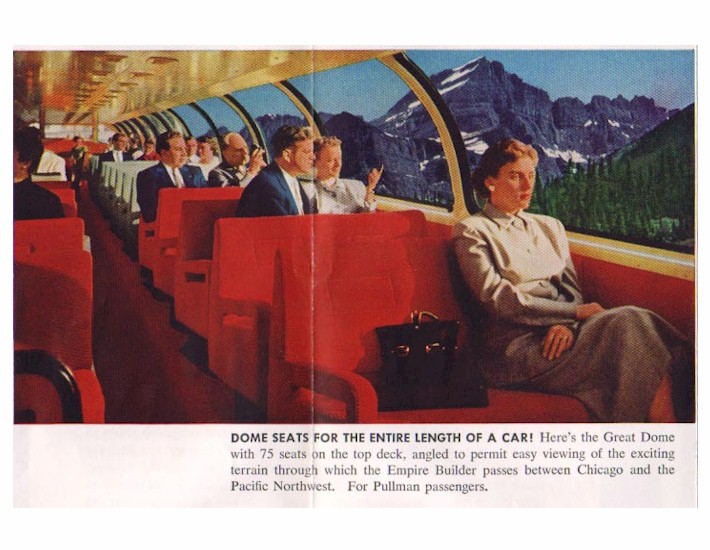
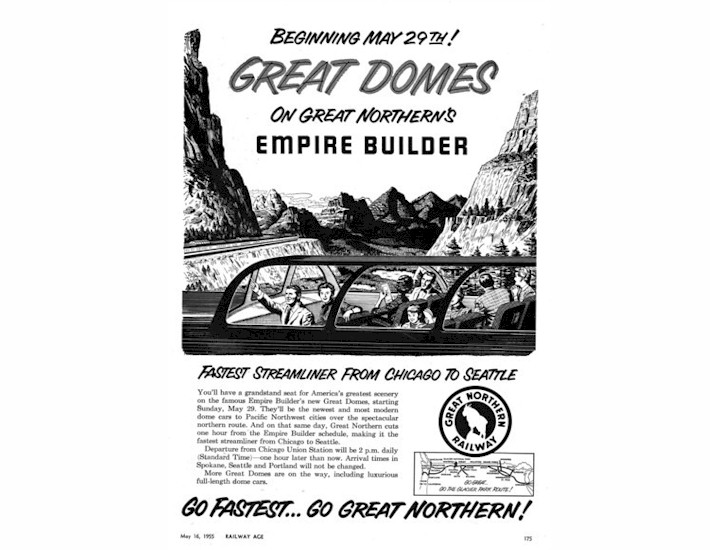
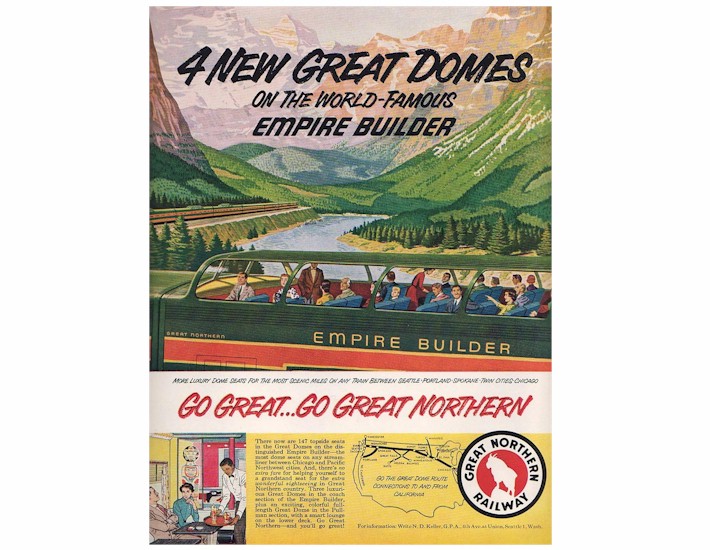
The Great Northern did not waste any time in advertising the new domes, and the fact that the Empire Builder had more dome seating for passengers than any of their competitors. In the original configuration, the upper level of the Great Dome featured 57 coach-style seats, along with 18 lounge-style seats. The lower level featured a bar and seating for 34 more passengers. The full-length domes weren't perfect. The air conditioning was not always able to stand up to the hot Montana sun, and Northern Pacific employees snickered that Empire Builder sleeping car passengers, who were the only ones allowed in the full-length dome, sometimes walked up to a short dome (meant for coach passengers) for a better view.
So where did the Great Domes on the Empire Builder actually operate and what did passengers on the Great Northern get to see out their windows? The train departed daily from Chicago's Union Station and headed through the western suburbs, including making a stop at Aurora. From there, it was a quick jaunt on the Burlington across Northern Illinois. Near Savanna, the train would make a turn to the northwest and follow the east side of the Mississippi River through Illinois and Wisconsin... all the way to the Twin Cities. The Empire Builder would then switch on to the Great Northern and follow its route all the way through to the Pacific Northwest. It should be noted that between the Twin Cities and Minot, the Empire Builder under the Great Northern, took a slightly different routing than the present-day Amtrak version. After seeing the prairies of North Dakota and East Central Montana, the train would skirt the southern edge of Glacier National Park. From there, it was a pass through Idaho's panhandle and on to Washington State -- where the train would have to traverse the Cascade Mountains before reaching the coast.
Even though passengers generally loved the brand new full-length Great Dome cars on the Great Northern Empire Builder, all railroads began losing passengers in droves during the 1950's and 1960's. This was mainly due to the new interstate highway system opening up around the country. Instead of being limited by a train that only ran once a day to where someone wanted to go -- families could now get there just as fast in their automobile. Interstate highways made driving slow two-lane roads across the country a thing of the past. By the late 1960's, the railroads -- including the Great Northern -- knew they could not hold on much longer.
Despite the serious downward trends they were facing, officials with the Great Northern remained hopeful that maybe a re-launch and a re-branding of their train service would draw some passengers back. In 1967, Great Northern began their "Big Sky Blue" era. Diesel engines and most passenger cars received dark gray coloring on top, and a thick white stripe and "Big Sky Blue" below. All six of the Great Domes were repainted accordingly.
On March 2, 1970, the Great Northern, together with the Northern Pacific Railway, the Chicago, Burlington and Quincy Railroad and the Spokane, Portland and Seattle Railway merged to form the Burlington Northern Railroad. The five Great Domes owned by the Great Northern -- and the one Great Dome owned by the Burlington -- were now all part of a new fleet owned by the then-newly formed Burlington Northern. To continue the story of the Great Domes, click on the "Burlington Years" link located to the left.
This page is maintained by the Midwest Rail Rangers. If you enjoyed the content, please consider making a donation to our 501(c)(3) non-profit organization. Click the link below; even the smallest amounts help our research, web design, and domain hosting.
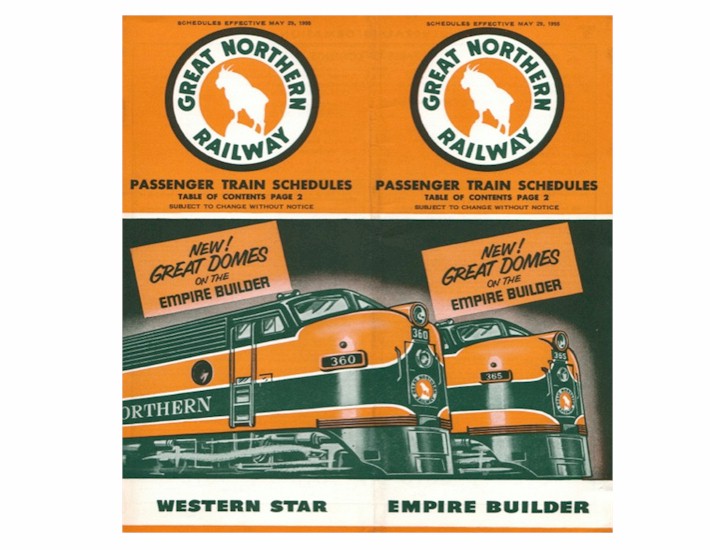
A Great Northern advertisement from 1955 shows off the 'new' Great Domes.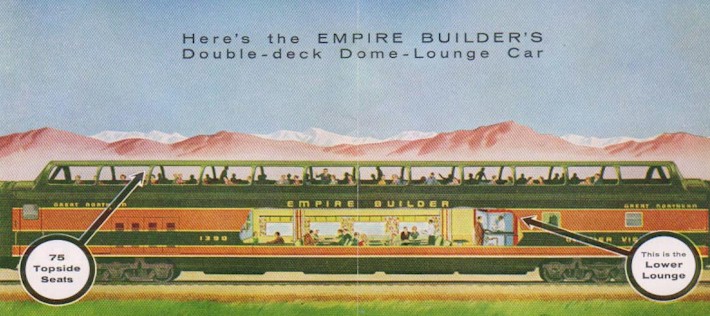

 A view of what the interior of the Great Dome would have looked like in 1964.
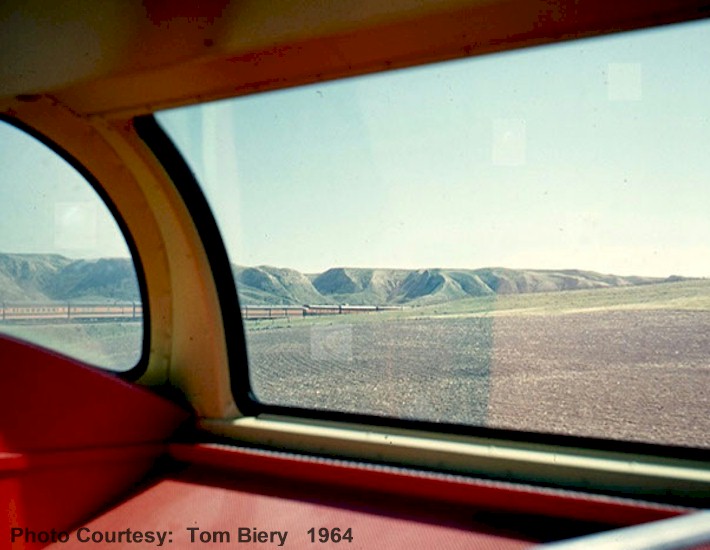 A view out the windows of the Great Dome from a trip taken in 1964.
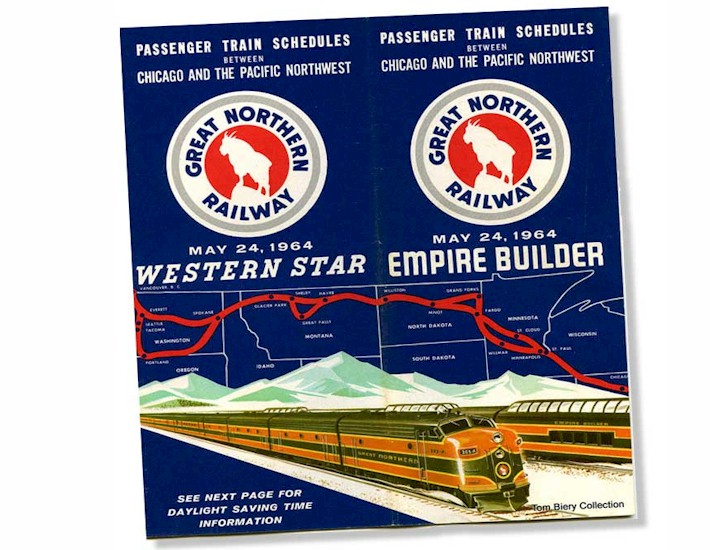 A 1964 Great Northern Timetable featuring the Great Dome cars.
 A view out the front windows of a Great Dome car in 1964.
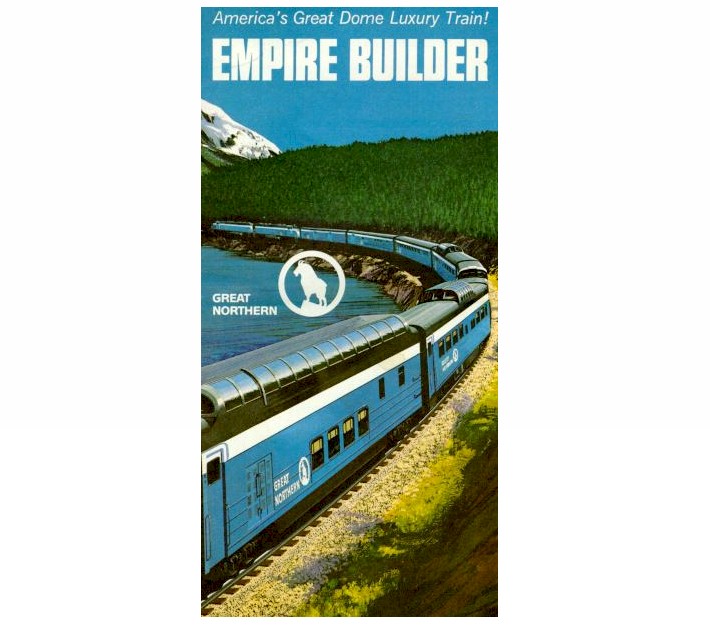




The final Great Northern timetable (pictured above) was issued less than one month before the company was merged into the Burlington Northern.