This article is (c)2022 Wisconsin Great Northern Railroad and the Midwest Rail Rangers, a 501(c)(3) non-profit historical partner. No part of the materials available through the www.MarkTwainZephyr.com and www.ZephyrHistory.com sites may be copied, photocopied, reproduced, translated or reduced to any electronic medium or machine-readable form, in whole or in part, without prior written consent of the above parties. Historical information: MRRC / P.O. Box 184 / Barron, WI 54812 / info@railrangers.org
The Chicago, Burlington & Quincy Railroad (CB&Q), popularly known as the Burlington Route, suggests images of big-time railroading with the largest fleet of streamliners in the United States: the Burlington Zephyrs.
In the above interview from December 2021, we had the chance to talk with Peter Budd, the great grandson of CB&Q President Ralph Budd. Peter is a truck driver in the suburban Twin Cities. His grandfather was John Marshall Budd, the man who was president of the Great Northern Railway and oversaw the merger with the Burlington. Here he discusses his family history and memories.
The actual construction of the Zephyrs was left up to the Budd Company in Philadelphia, Pennsylvania. Budd was founded in 1912 by Edward G. Budd, whose fame came from his development of the first all-steel automobile bodies in 1913, and his company's invention of the "shotweld" technique for joining pieces of stainless steel without damaging its anti-corrosion properties in the 1930s. Edward Budd and CB&Q President Ralph Budd are said to be very distant cousins.
In the above interview from December 2021, we had the chance to talk with Mary Budd Mucci, the granddaughter of Budd Company President, Edward G. Budd. Mary is retired and lives in New Mexico. Her father was Edward G. Budd, Jr., who ended up taking over the business. Here she discusses her family history and memories.
Designs for the first Zephyr were primarily left up to three individuals at the Budd Company. Col. Earl Ragsdale developed Budd's "shotweld" patented system of stainless all-steel construction (described above). Meanwhile, architect Albert Gardner Dean designed the body of the train, including the classic "shovel nose". Albert's brother, Walter Dean, designed the Zephyr's articulated wheel sets, which involved two cars sharing one truck. This was done to make the Zephyr weigh less and be more aerodynamic. While Ralph Budd and Edward G. Budd received most of the attention when it came to the Zephyrs, it is Ragsdale and the Deans who actually did most of the physical design work.
In the above interview from December 2021, we had the chance to talk with Charlotte Dean Mitchell, the daughter of Zephyr designer Albert Dean. Charlotte is retired and lives in the Twin Cities area. Her uncle was Walter Dean, also co-designer of the Zephyrs. Here she discusses family history and memories.
On April 7, 1934, CB&Q introduced Zephyr #9900. The rakish, shovelnose Zephyr #9900 and combination baggage-buffet-chair car #505, plus coach-parlor-observation car #570 were the vanguard of the Zephyr fleet. Burlington powered its ultramodern motor train with a Winton eight-cylinder 600-horsepower diesel engine. The aerodynamic, pocket streamliner was 197 feet long, carried 72 passengers, and was capable of speeds in excess of 100 miles per hour.
On May 26, 1934, Burlington staged one of the greatest transportation events of the decade when Zephyr #9900 raced 1,015 miles in a record-breaking (13 hours and five minutes) non-stop, dawn-to-dusk run at an average speed of 77.6 mph from Denver to Chicago's Century of Progress Transportation Fair. The Zephyr had set a world record for fast, long distance travel.
Zephyr #9900 was later renamed Pioneer Zephyr and entered into revenue service between Kansas City, Omaha, and Lincoln on November 11, 1934. By the end of the first year of service, the Pioneer Zephyr had earned $895,000 in profits through increased ridership plus lower operating and maintenance costs compared to Burlington steam-powered trains. For CB&Q, the Pioneer Zephyr was the silver bullet that returned passengers to rail travel. By 1960, it had logged 3,222,898 miles when it was donated to Chicago's Museum of Science and Industry, where it is proudly displayed today. CB&Q management was so pleased with the success of the Pioneer Zephyr that soon a fleet of Zephyr trains were added to the Burlington Route.
In 1935, one of the busiest passenger corridors in the Midwest was between Chicago and St. Paul-Minneapolis. It was here CB&Q chose to run its second and third Zephyr trains, in direct competition with the Milwaukee Road's Hiawatha and Chicago & North Western's 400. The original, three-car Twin Zephyrs, #9901 and #9902, were inaugurated April 21, 1935.
From Chicago Union Station, the Twin Zephyrs followed the Burlington commuter lines 38 miles west to Aurora, where the mainline diverged to Galesburg or Savanna, Illinois. From Savanna, it was a fast ride along the east bank of the Mississippi River to St. Paul, Minnesota. The Twin Zephyrs were so successful that CB&Q management recognized the need for bigger and better trains. In keeping with the Zephyr theme, locomotives and cars ordered for the second Twin Zephyrs, which premiered December 18, 1936, were again named after Greek mythology and known as "Train of the Gods and Goddesses."
Led by locomotives #9904 "Pegasus" and #9905 "Zephyrus", the car names included "Apollo", "Neptune", "Mars", "Vulcan", "Mercury", "Jupiter", "Venus", "Vesta", "Minerva", "Ceres", "Diana", and "Juno". The modern trains looked brilliant in silver and fluted stainless-steel finish. The name 'Burlington' stood out in black sans serif letting across the top letterboard of each car. Interior decor was art deco luxury with stainless-steel molding, tubular lights, and pastel shades of blue, gray, and green. The sleek exterior design, including truck shrouds, of the updated Twin Zephyrs (later renamed Morning Zephyr and Afternoon Zephyr) contributed to the smooth, flowing streamlined style.
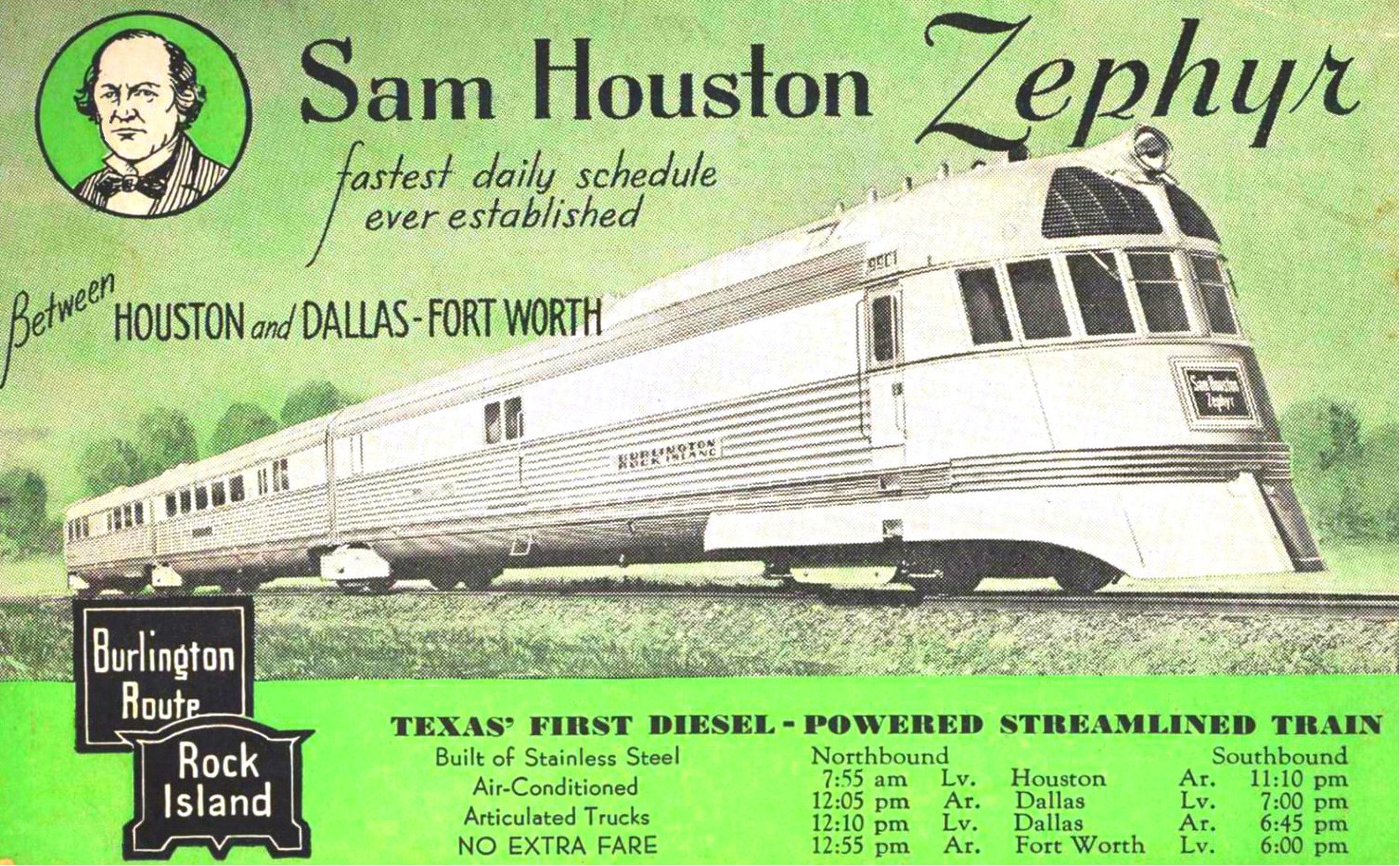
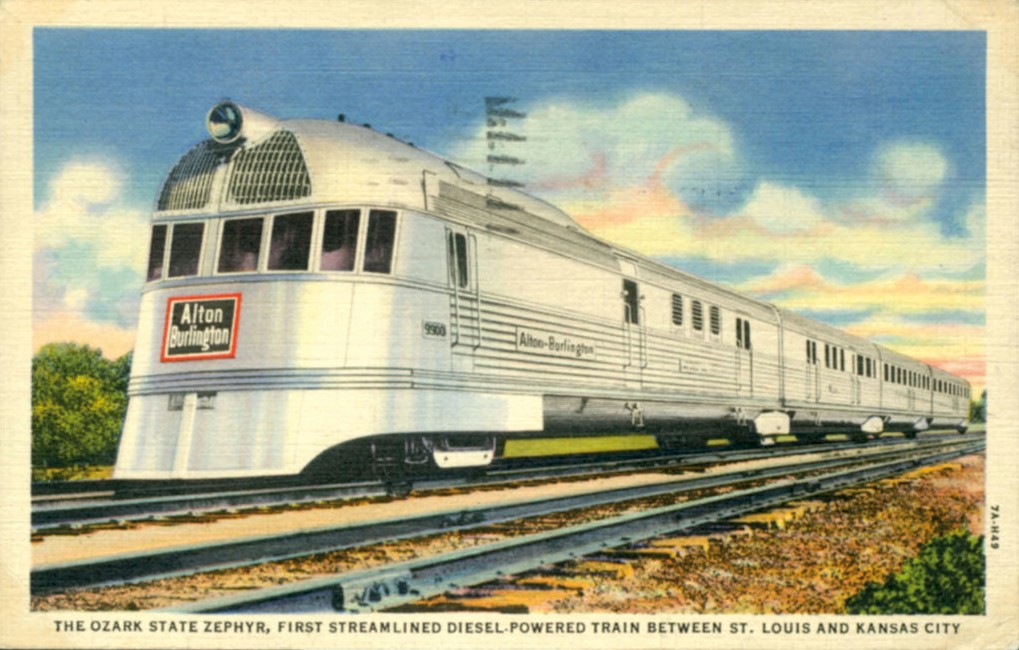
The original Twin Zephyrs eventually moved into service as the Sam Houston Zephyr (#9901, operated Houston to Dallas-Fort Worth, Texas) and the Ozark State Zephyr (#9902, operated between Kansas City and St. Louis, Missouri).
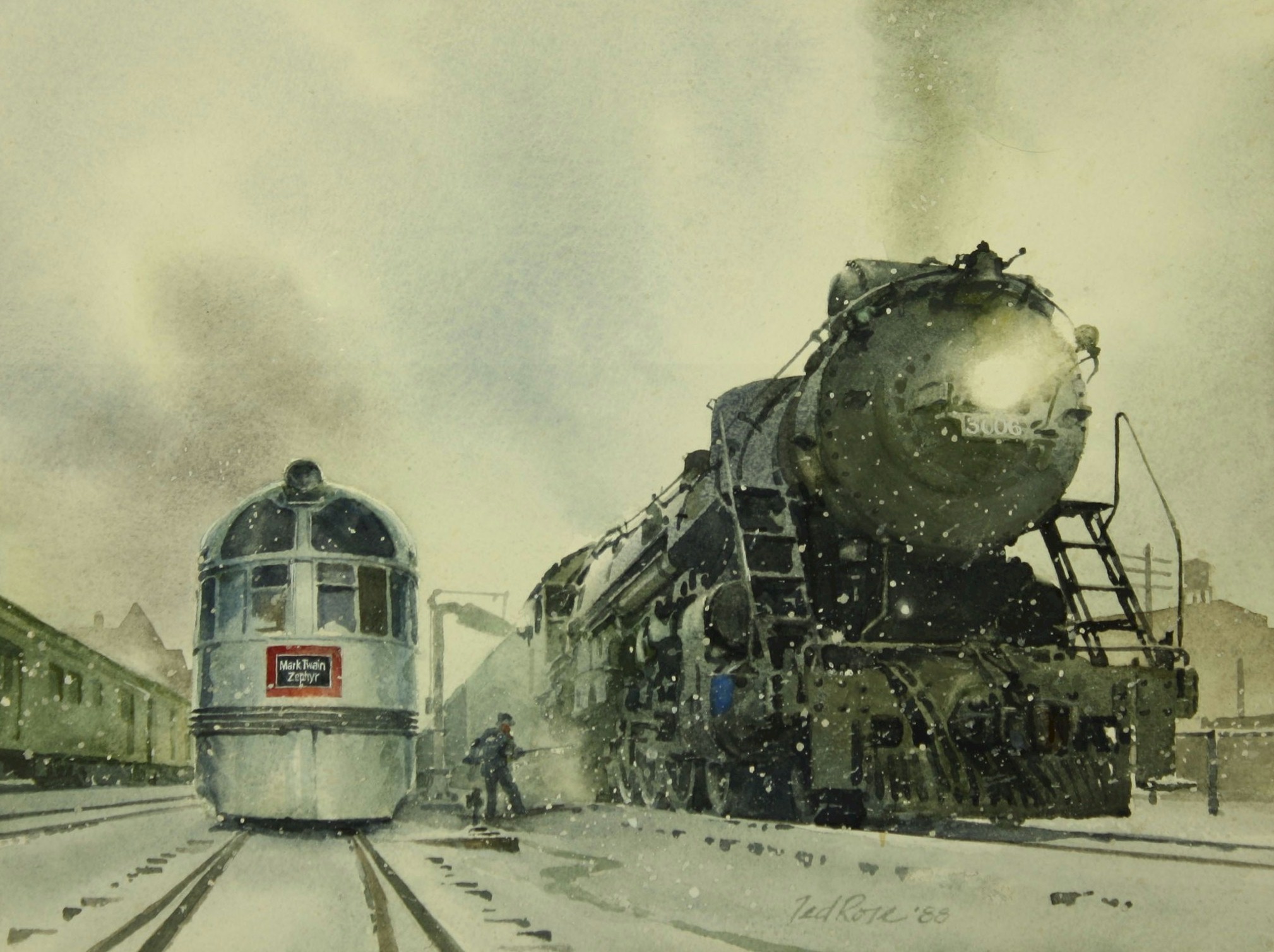
The Mark Twain Zephyr was the fourth Zephyr delivered to the CB&Q. Locomotive #9903 entered service October 28, 1935, from St. Louis, Missouri to Burlington, Iowa. The Mark Twain Zephyr was a four-car articulated train, similar in style to the original Twin Zephyrs. Authors Dave Lotz, Kandace Tabern, and Robert Tabern will share with you a more in-depth history of the Mark Twain Zephyr in the other sections of this website... and more on its restoration and re-birth at the Wisconsin Great Northern Railroad.
On May 31, 1936, CB&Q hastily transferred the Pioneer Zephyr and Mark Twain Zephyr to Chicago-Denver service. The trains were billed as Advance Denver Zephyrs, christened with new names, to beat Union Pacific's new City of Denver train, which was scheduled to begin service June 18, 1936. Meanwhile, the Budd Company was building new, overnight trains for the CB&Q, to be called Denver Zephyrs. The stainless-steel coaches and sleeping cars were not fully articulated in groups of three; the motive power was a separate unit. The larger Denver Zephyrs required additional power, so CB&Q asked Electro-Motive Corporation in La Grange, Illinois, to design a shovelnose A-unit housing a pair of V-12 1,800-horsepower engines, coupled to a cableless booster B-unit, containing a single V-16 1,200-horsepower-rated engine. Both units rode on standard four-wheel trucks with a longer wheelbase.
The Denver Zephyr locomotives were the first multiple-units on the Burlington roster. Beginning a CB&Q tradition, Denver Zephyr locomotives and cars were prefixed with the name Silver. Locomotive #9906A was "Silver King" and #9906B was "Silver Queen", while #9907A was "Silver Knight" and #9907B was "Silver Princess". On November 8, 1936, the trademark Burlington shovelnose locomotives were in vogue when they premiered on the Denver Zephyrs, on a fast 15-hour 50-minute, 1,034-mile overnight run from Chicago to Denver.
On April 20, 1939, the first non-articulated Zephyr made its debut with service between Kansas City and St. Louis, Missouri. The small, three-car train was named General Pershing Zephyr in honor of World War I General John Pershing. Shovelnose #9908, a combination locomotive-baggage car, was named "Silver Charger" after Pershing's horse. Locomotive #9908 was the most advanced of the shovelnose units and the last built. "Silver Charger" powered other Zephyr trains and remained on the Burlington roster until 1966, when it was donated to the National Museum of Transportation in St. Louis, Missouri for permanent display.
The 11 shovelnose A-B units served the Burlington for 32 years, from 1934 to 1966. In 1940 and 1941, Burlington ordered 12 custom built diesels from Electro-Motive. Of these, nine were slant-nosed E5 cab units and three were booster units, all stainless steel to match the distinctive trains they intended to pull. Two of the last prewar additions to the Zephyr fleet were the Silver Streak Zephyr in April 1940 and the Texas Zephyr (Denver-Dallas-Ft. Worth) in August 1940. The Silver Streak replaced the original Pioneer Zephyr on the Kansas City-Omaha-Lincoln route.
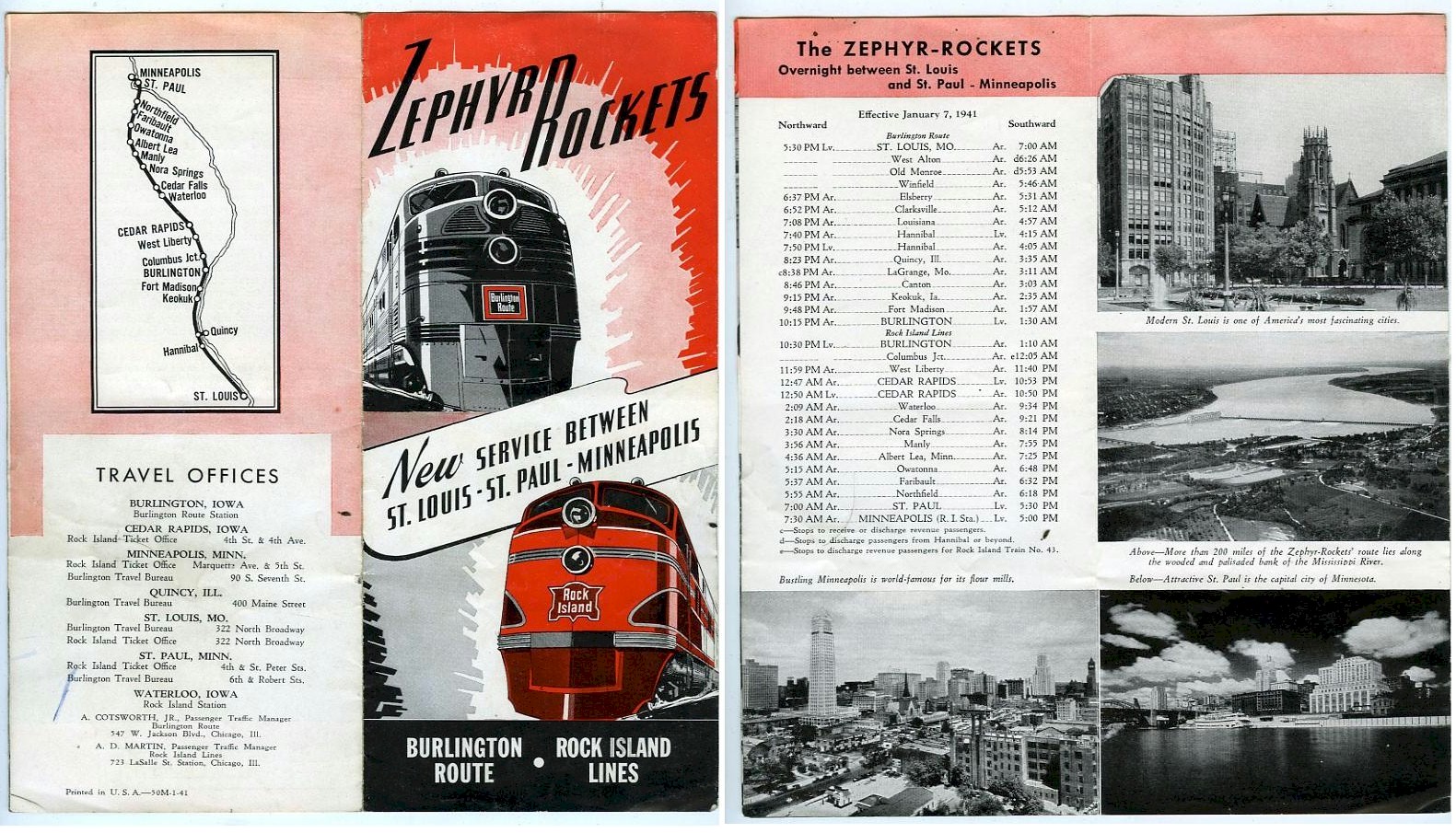
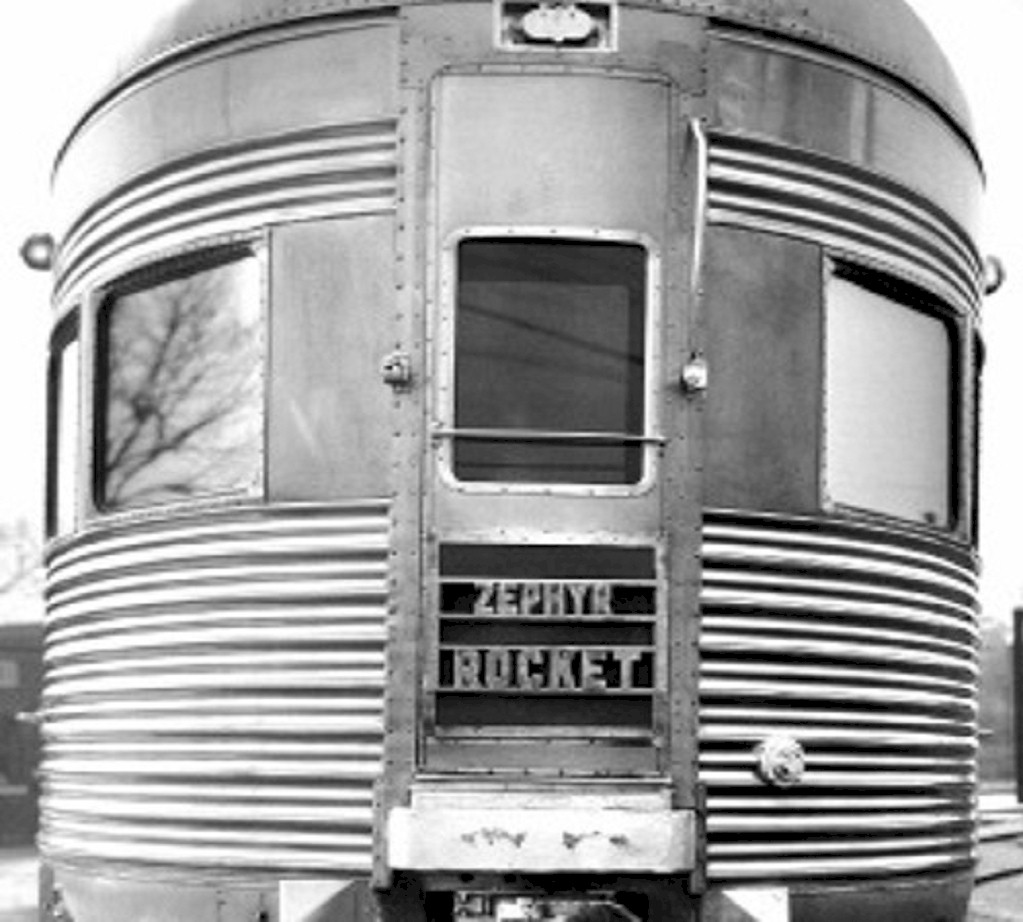
Another unique passenger train was the Zephyr-Rocket, a partnership between Burlington and the Rock Island Railroad inaugurated in January 1941. The new train provided service from Minneapolis to Burlington, Iowa (via Rock Island, Illinois) and from Burlington, Iowa to St. Louis, Missouri (via the Burlington Route).
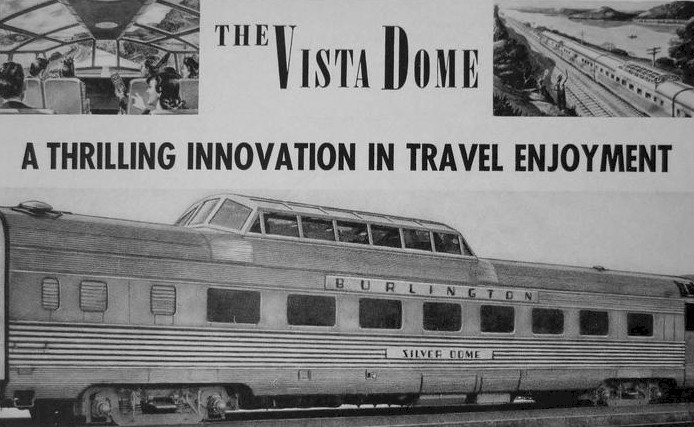
In 1945, the innovative CB&Q introduced glass-topped Vista-Dome coaches. The first dome coach was built in Burlington's Aurora Shops and named "Silver Dome." The new dome car proved so popular that the Burlington, in cooperation with the Denver & Rio Grande Western, and the Western Pacific, had 53 of them built by the Budd Company.
The Vista-Domes debuted December 19, 1947, on the third and final set of Twin Zephyrs. The dome cars offered Burlington passengers' dramatic views of the upper Mississippi Valley's natural beauty. CB&Q route guides touted cliff-high palisades and abundant wildlife on the Mississippi River Scenic Line, "where nature smiles 300 miles". The Twin Zephyrs were the first streamliners in the United States to feature regularly scheduled dome cars.
These new trains were rated the finest and fastest in the Zephyr fleet. The sleek trains sped the distance between Chicago and the Twin Cities in six hours and 45 minutes. For many years, the Morning Zephyr (Train #21) had the fastest overall running time in the world, 84mph between East Dubuque, Illinois, and Prairie du Chien, Wisconsin. Burlington was also a forwarder of passengers for parent Hill Lines (Great Northern/Northern Pacific) in the busy Chicago-Twin Cities corridor. In later years, Great Northern's Empire Builder and Northern Pacific's North Coast Limited were often combined with the Twin Zephyrs on the St. Paul-Chicago portion of their transcontinental runs. Both flagship trains looked superb behind pairs of CB&Q silver E-units.
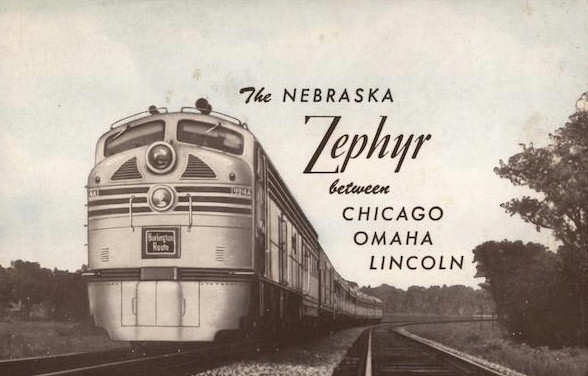
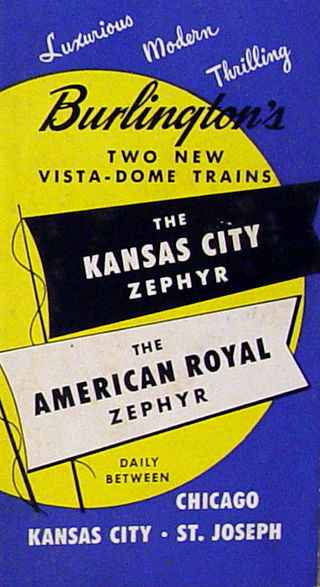
During the postwar years, the entire Zephyr fleet was upgraded with new or refurbished equipment. The first postwar Zephyr was the Nebraska Zephyr, introduced November 16, 1947, between Chicago-Omaha-Lincoln, replacing the Ak-Sar-Ben (Nebraska spelled backwards) Zephyr. Burlington had a banner year in 1953 with the introduction of two new Zephyr trains: on February 1, 1953, the Kansas City Zephyr and American Royal Zephyr (overnight train) premiered between Chicago-Kansas City-St. Joseph, Missouri; in October 1956, Burlington built the final trains in the Zephyr fleet, the Vista-Dome Denver Zephyrs. At that time, the Denver Zephyrs were considered the finest overnight trains in America.
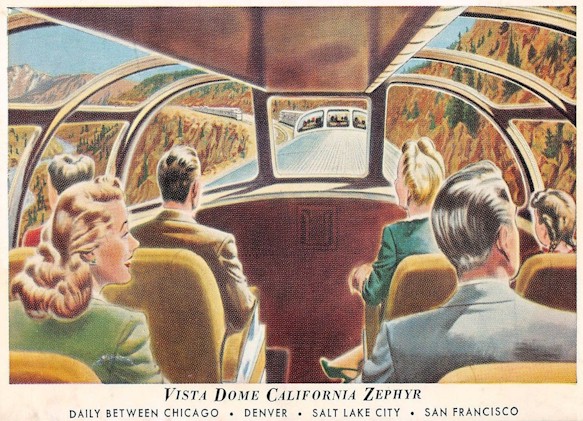
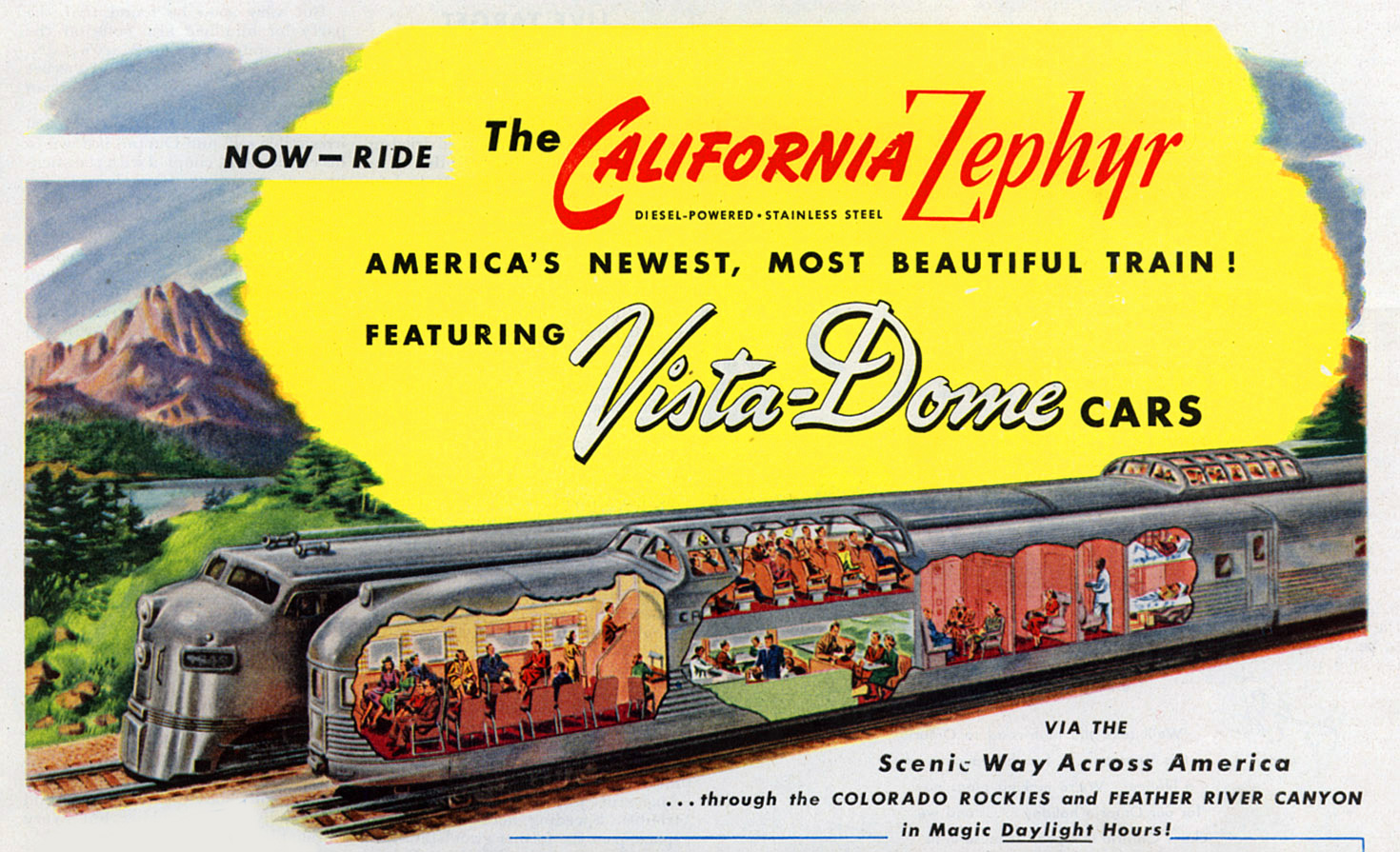
To many travelers, the California Zephyr was the grandest passenger train of all. These superb Budd-built, stainless-steel trains began service March 20, 1949, between Chicago and San Francisco (Oakland) on the Burlington Route, the Denver & Rio Grande Western, and the Western Pacific. The California Zephyr route traversed some of the most spectacular scenery in the United States. Both westbound and eastbound trains were scheduled for scenic viewing during daylight hours, offering a captivating ride in Vista-Dome coaches. The trains followed Burlington trackage from Chicago to Denver, Colorado. Denver & Rio Grande Western handled the trains over the magnificent Front Range of the Colorado Rockies from Denver to Salt Lake City, Utah. Western Pacific then took the trains from Salt Lake City through California's awesome Feather River Canyon and into Oakland.
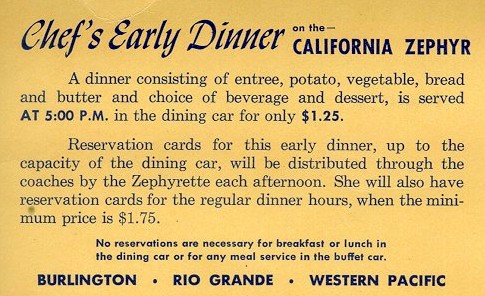
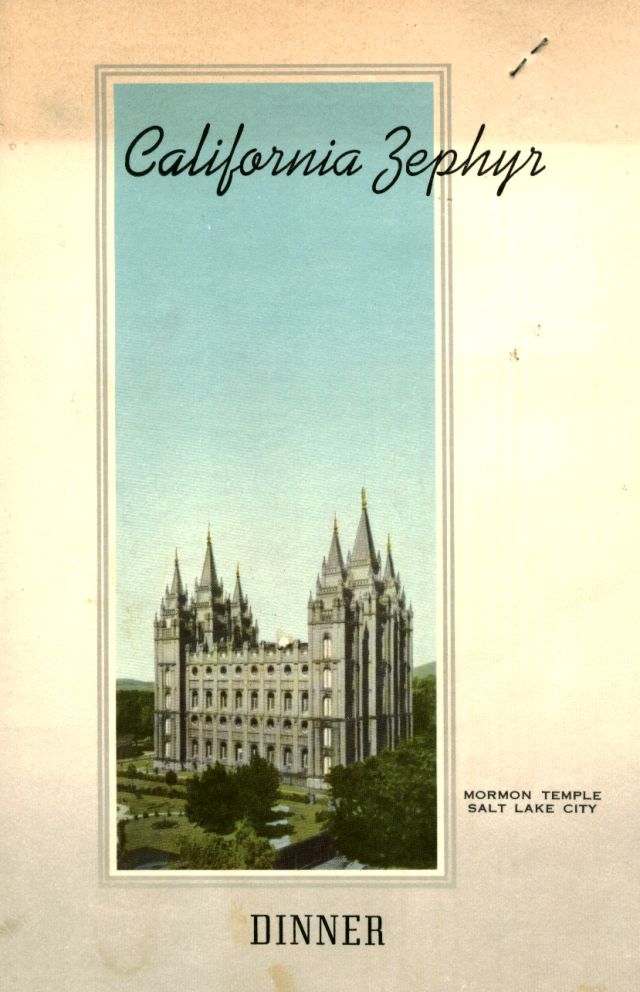
For many passengers, dining on the California Zephyr was a memorable experience, with real china, linen, fresh flowers, and regional cuisine. Each of the six California Zephyr trainsets had an on-board Zephyrette hostess, who handled passenger dinner reservations, first-aid, announcements, and public relations.
Despite Burlington's investment in passenger trains, the late 1950's and 1960's were unkind to all passenger trains. By 1970, declining passenger revenue (due to automobiles and jet airliners) ended the California Zephyr's 21-year reign. The most talked about train in the country had taken its place in railroad history.
Not to be forgotten, though, was the tremendous appeal of the original Pioneer Zephyr, whose sleek lines and streamlined design signaled the beginning of a styling revolution. In 1934 Depression days, the only real hope was the future and the future was the Zephyr. The new train increased revenues and provided hope for both the railroad and the American public that times would improve. The silver streamliner proved what could be done when the will to succeed and creative imagination were combined. During the peak years of passenger rail, the Zephyr was more than just transportation: it was the modern way to travel. Burlington kept up that image as it maintained far-reaching passenger service to Chicago, Denver, Dallas-Ft. Worth, Houston, St. Louis, Kansas City, Omaha, Oakland, and the Twin Cities with its fleet of Burlington Zephyrs, America's Distinctive Trains.
============================================
============================================
MarkTwainZephyr.com is maintained by the Wisconsin Great Northern Railroad. If you enjoyed the content, please consider making a donation to the Midwest Rail Rangers, our 501(c)(3) non-profit partner organization. The Midwest Rail Rangers are raising donations to purchase CB&Q and Mark Twain Zephyr memorabilia for future "Open Houses" and other special events. You can also get in touch with the Midwest Rail Rangers by e-mailing board@railrangers.org.

Written by John Kelly with Kandace & Robert Tabern

The Zephyr idea originated in 1932 when Burlington President Ralph Budd noticed declining passenger revenue on his railroad because of the Great Depression and the ascendance of automobiles and airplanes. He realized that something unique was needed to lure passengers back to train travel. Ralph Budd chose the name Zephyr for his new train after the "God of West Wind" in Greek mythology.

Burlington President Ralph Budd (above) came up with the idea for the Zephyrs.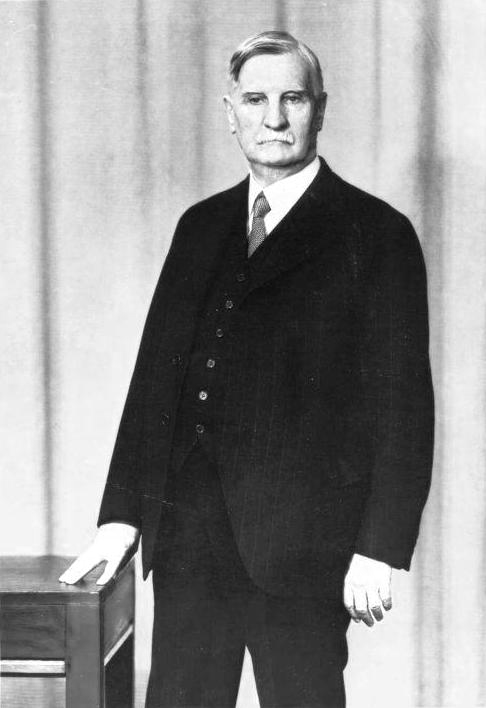
Edward G. Budd, President of the Budd Company, oversaw the building of the Zephyrs for the Chicago, Burlington & Quincy Railroad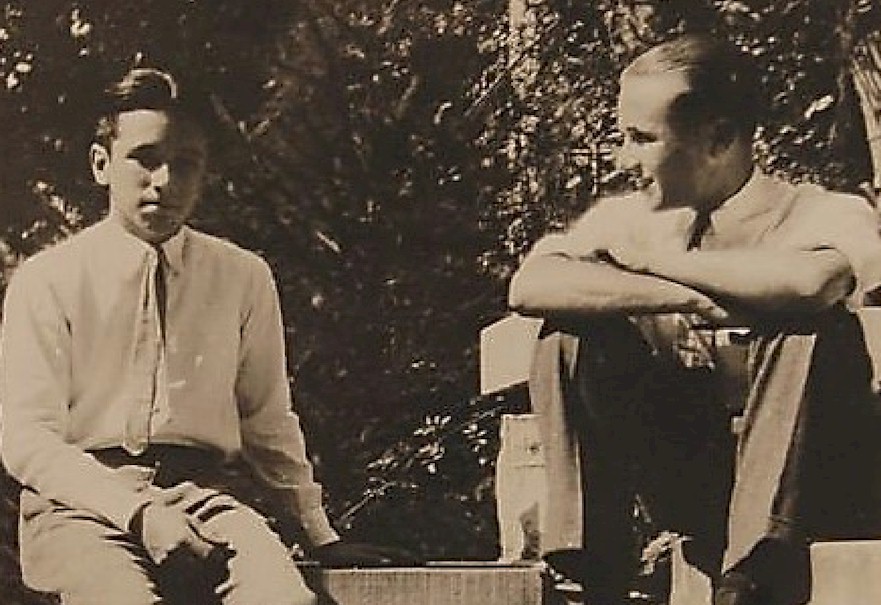
Albert Gardner Dean and Walter Dean played an important role in the Zephyr's design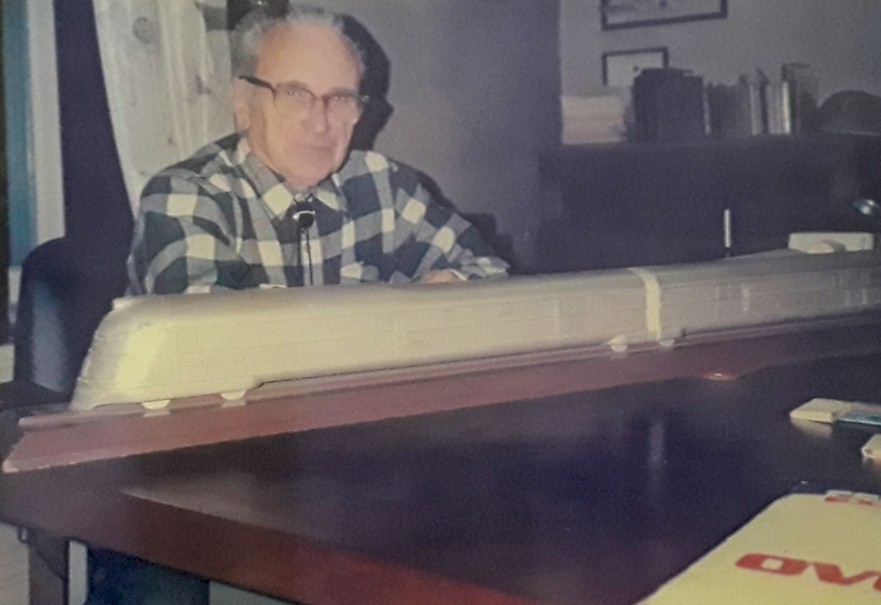
Albert Gardner Dean is seen here in the late 1980s;
the original Zephyr wind tunnel model sits on his desk

The Mark Twain Zephyr was built at Budd's plant in Philadelphia, Pennsylvania
Budd Company Photograph
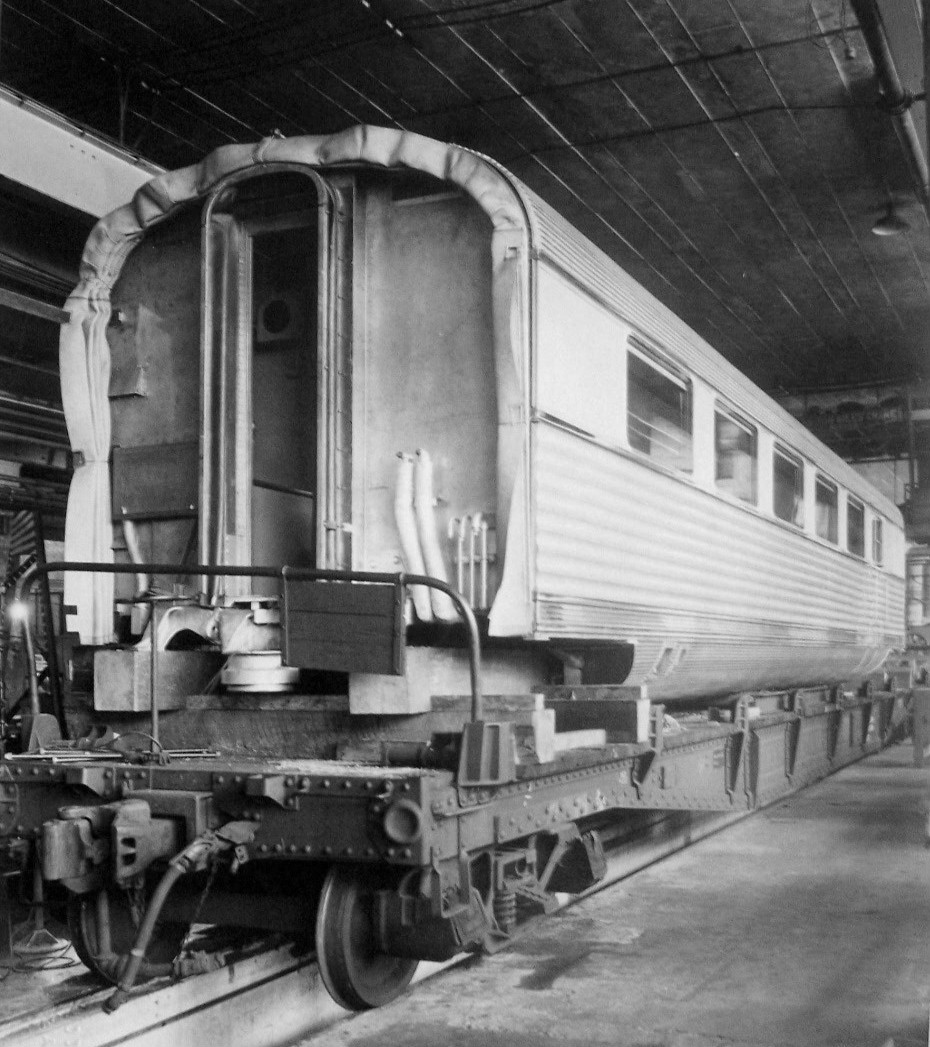
CB&Q Photo of Zephyr coach #525 on a flatcar at the Budd Company plant in Philadelphia, ready for delivery to the Q. The articulated coupling is visible. This is the fourth car of the Pioneer Zephyr. The Burlington ordered the additional car because of ridership demand during the time Budd was building the Mark Twain Zephyr.
Budd Company Photograph
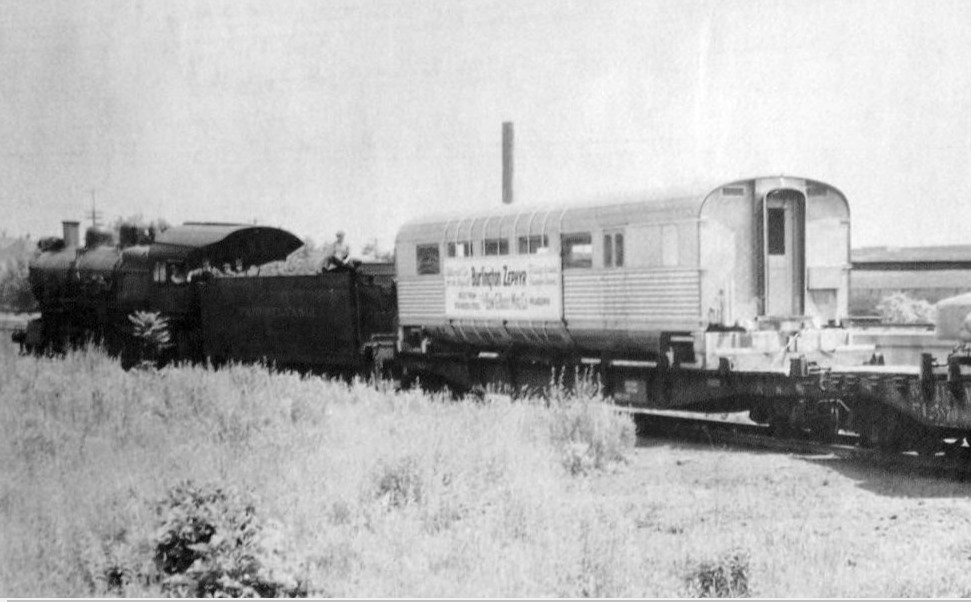
CB&Q Photo of Zephyr coach #525 on a flatcar at the Budd Company plant in Philadelphia. The articulated coupling is visible. Behind it is a second flat car loaded with the single additional truck needed for the addition to the #9900. This is the fourth car of the Pioneer Zephyr.
Budd Company Photograph
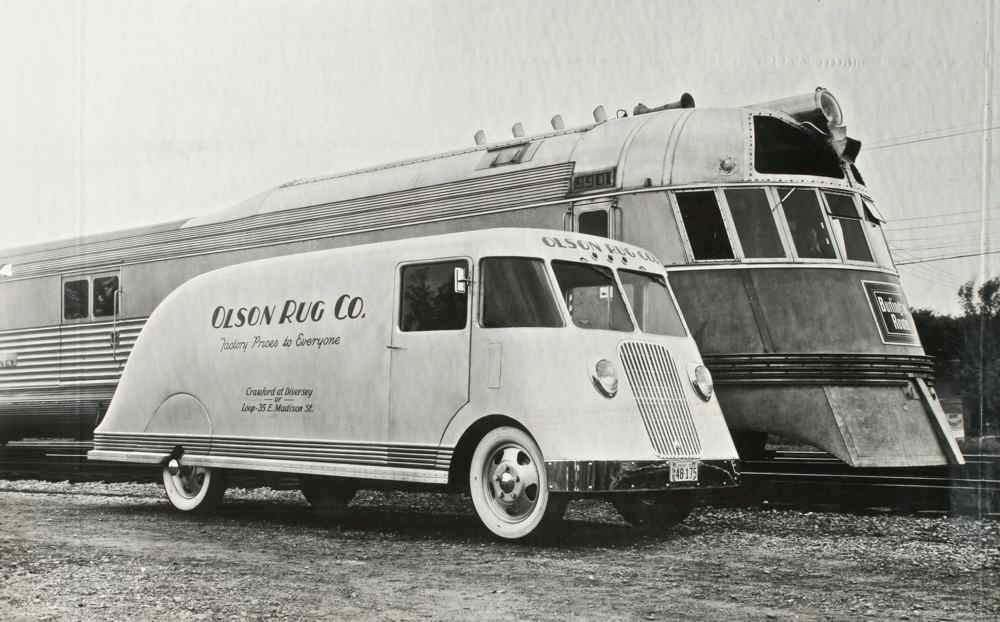
An Olson Rug Truck mimicked the aerodynamic design of Burlington Zephyr #9901 -
Lopatka.net
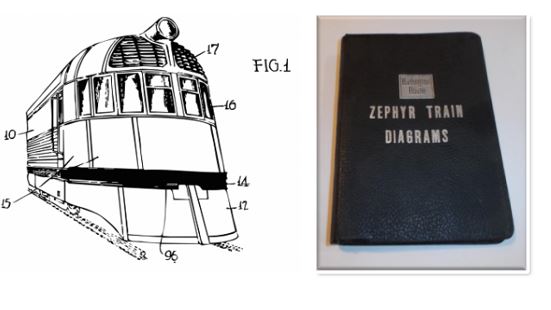
Greg Vreeland Collection / Wisconsin Great Northern Railroad
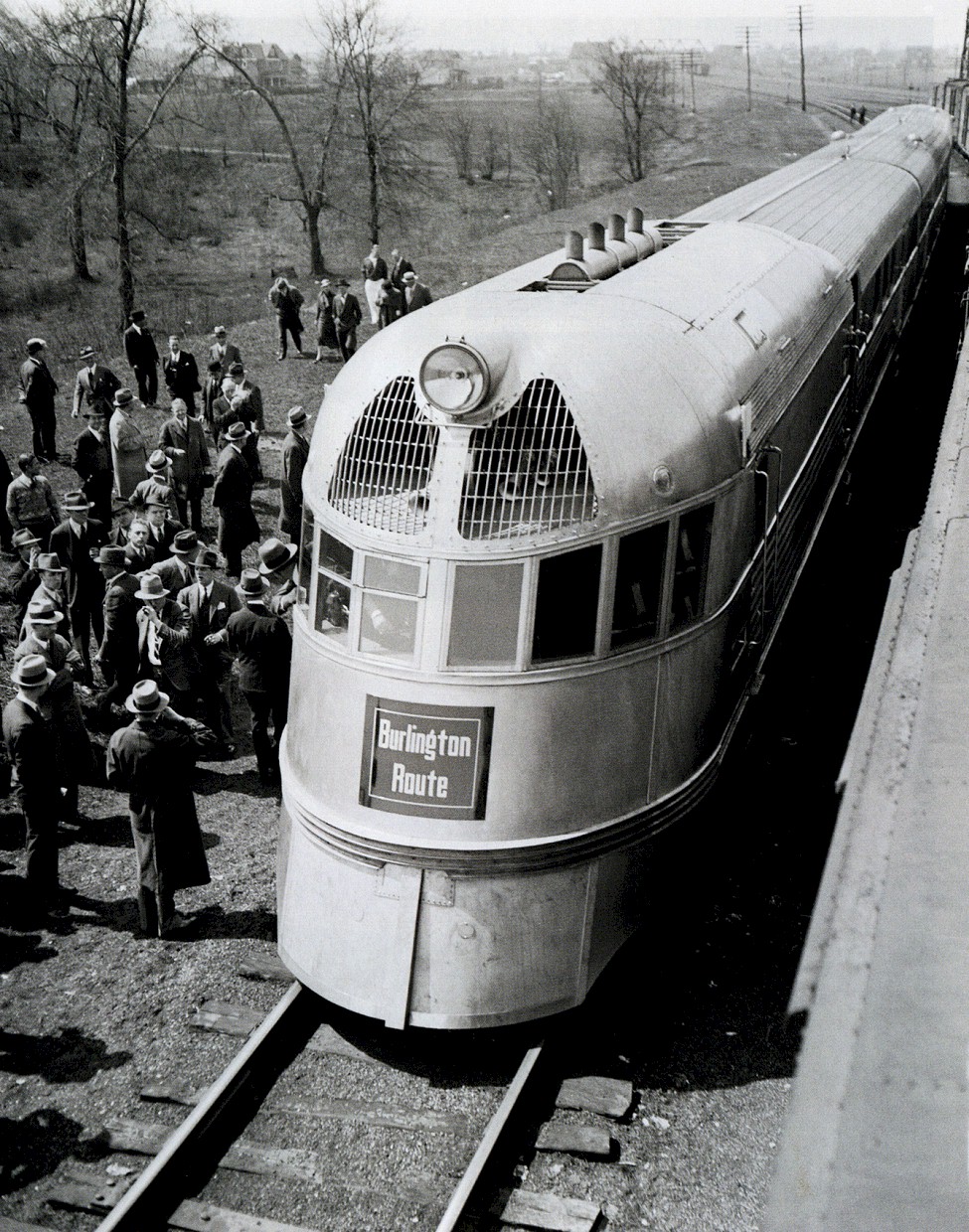
No date or information was provided with this photo... but it was likely taken soon after the Zephyr 9900 train set rolled out of Budd's Philadelphia plant in April 1934.
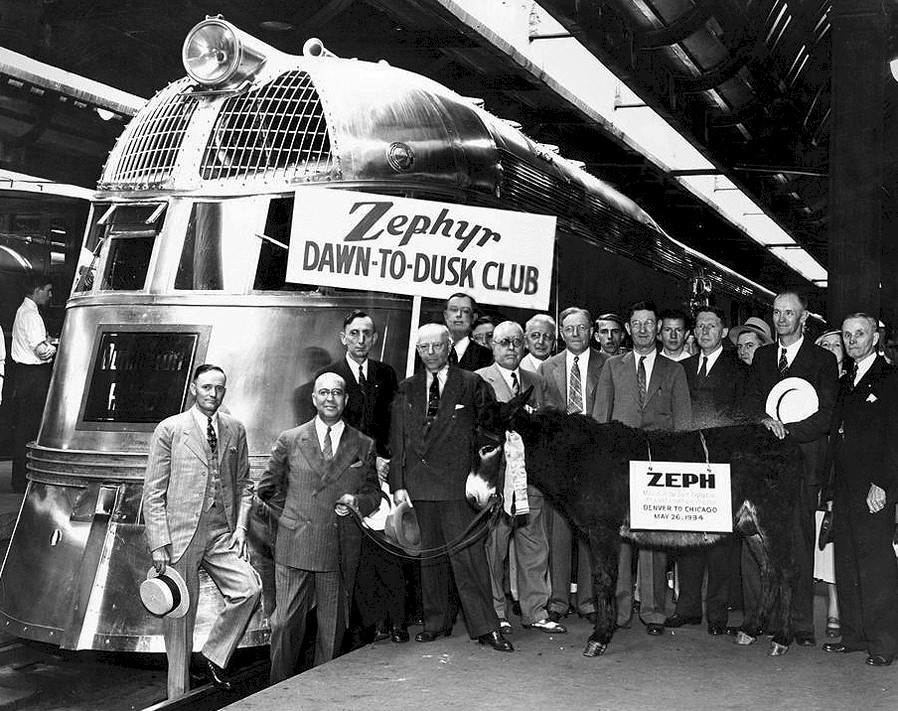
This photo was quite famous at the time but has since faded into relative obscurity. It was taken by the Chicago Tribune, directly after the train completed its historic non-stop run from Denver to Chicago on May 26, 1934. Featured in the picture were those aboard, as well as the mascot burro "Zeph."
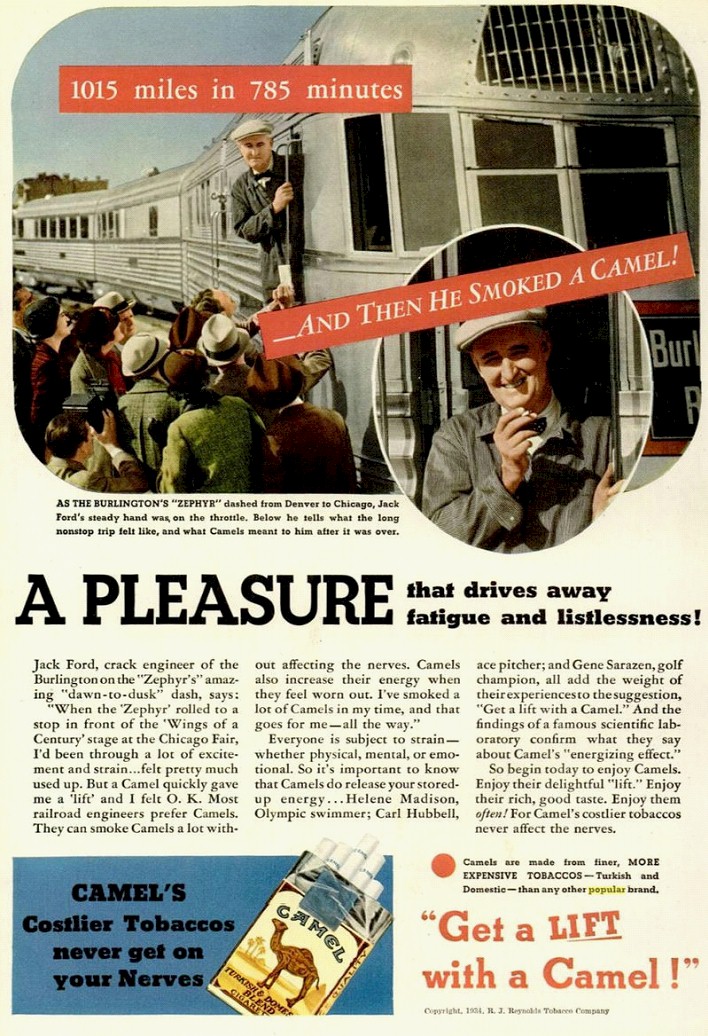
Cigarette ad showing the Pioneer Zephyr train and describing the run in 1934.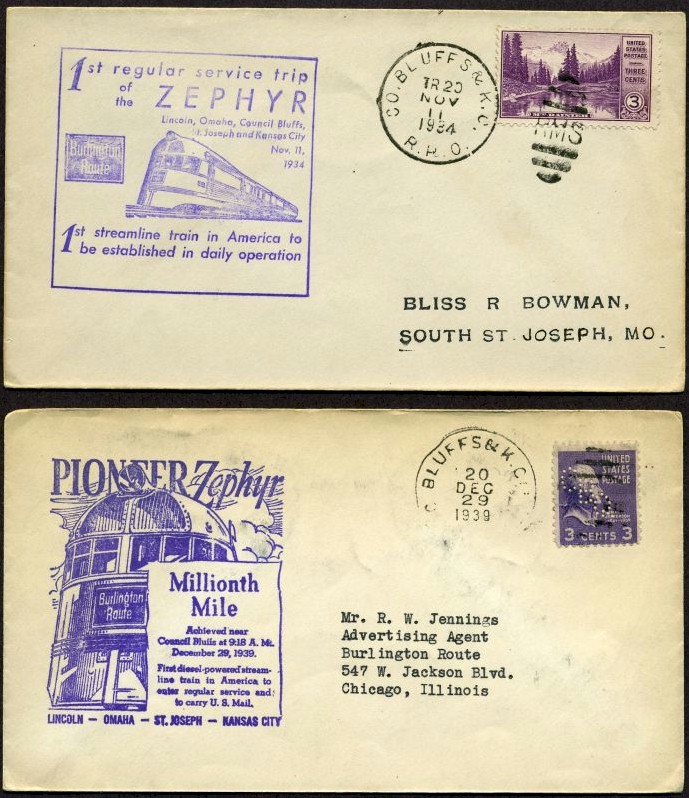
Commemorative postal covers that were carried aboard the Pioneer Zephyr for its first revenue run on November 11, 1934 (top), and as it crossed the one million mile mark, on December 29, 1939 (bottom).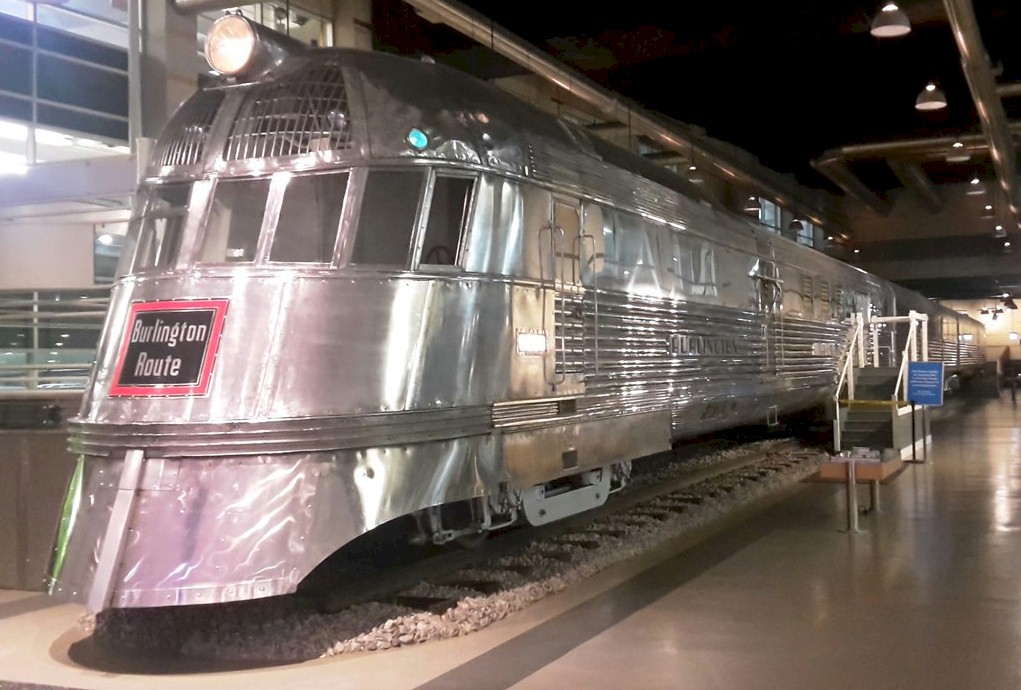
The Pioneer Zephyr is on display at Chicago's Museum of Science and Industry.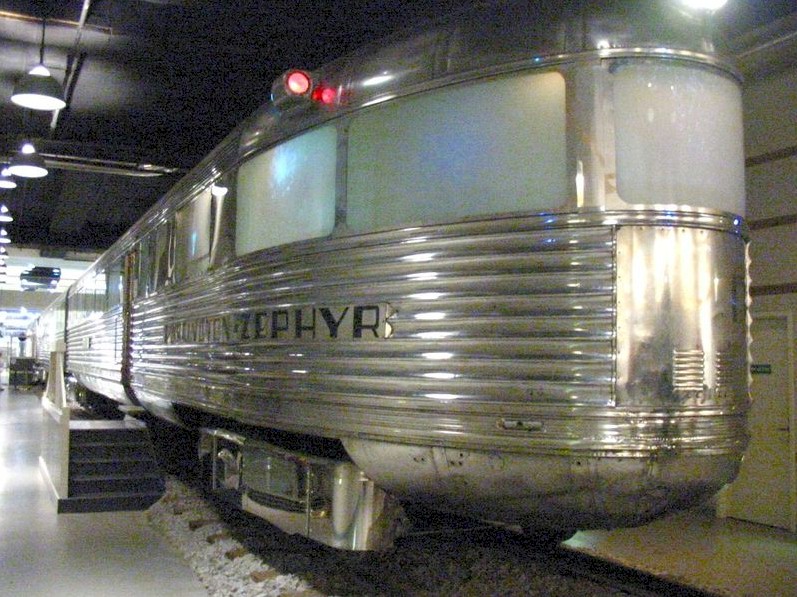
The Pioneer Zephyr is on display at Chicago's Museum of Science and Industry.
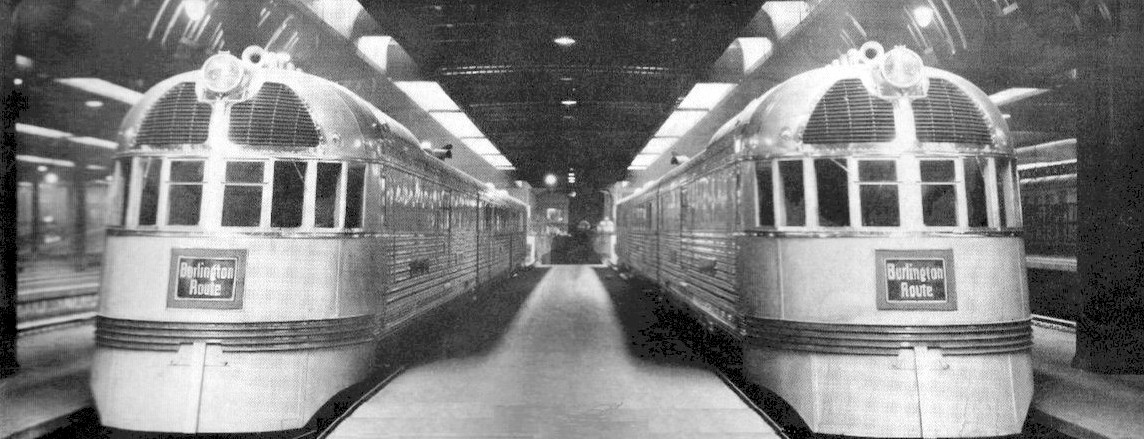
The CB&Q put the two Twin Cities Zephyr trains on display at Chicago Union Station in 1935, just before they entered into regular passenger service.
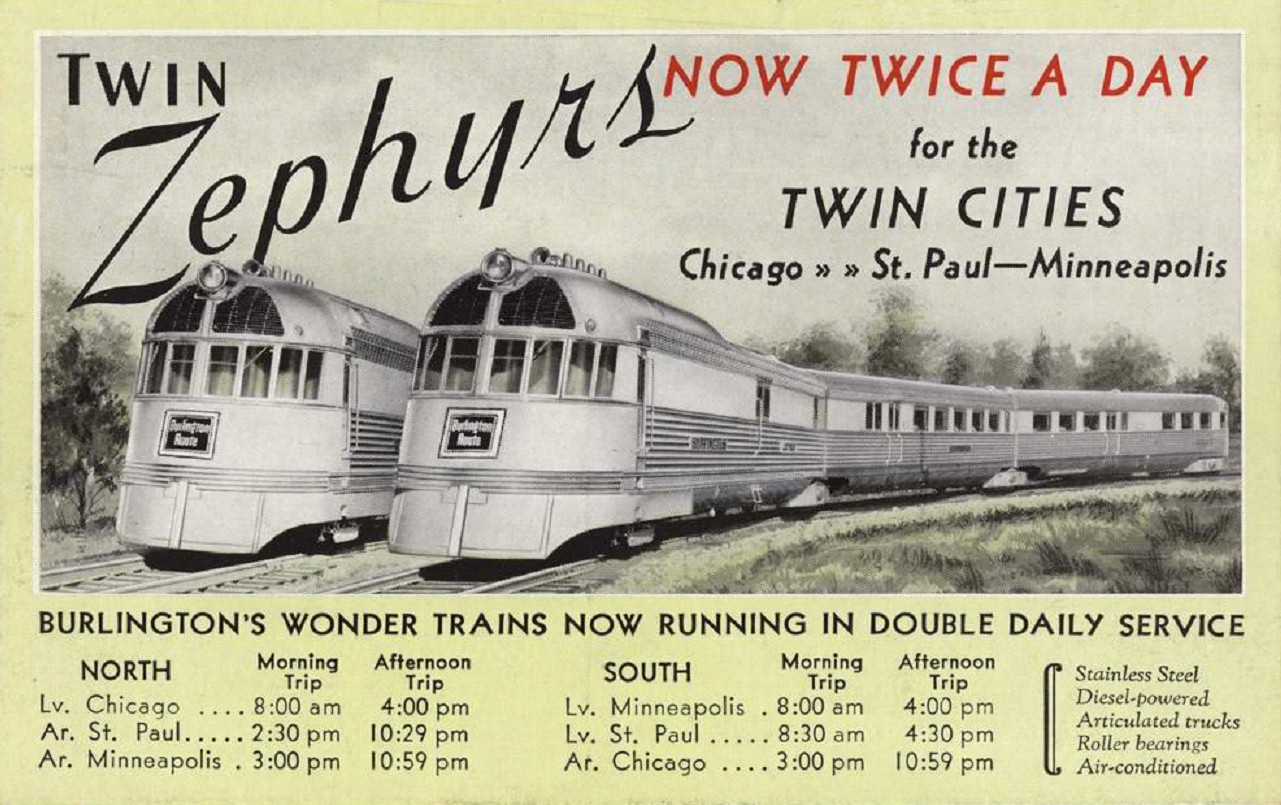
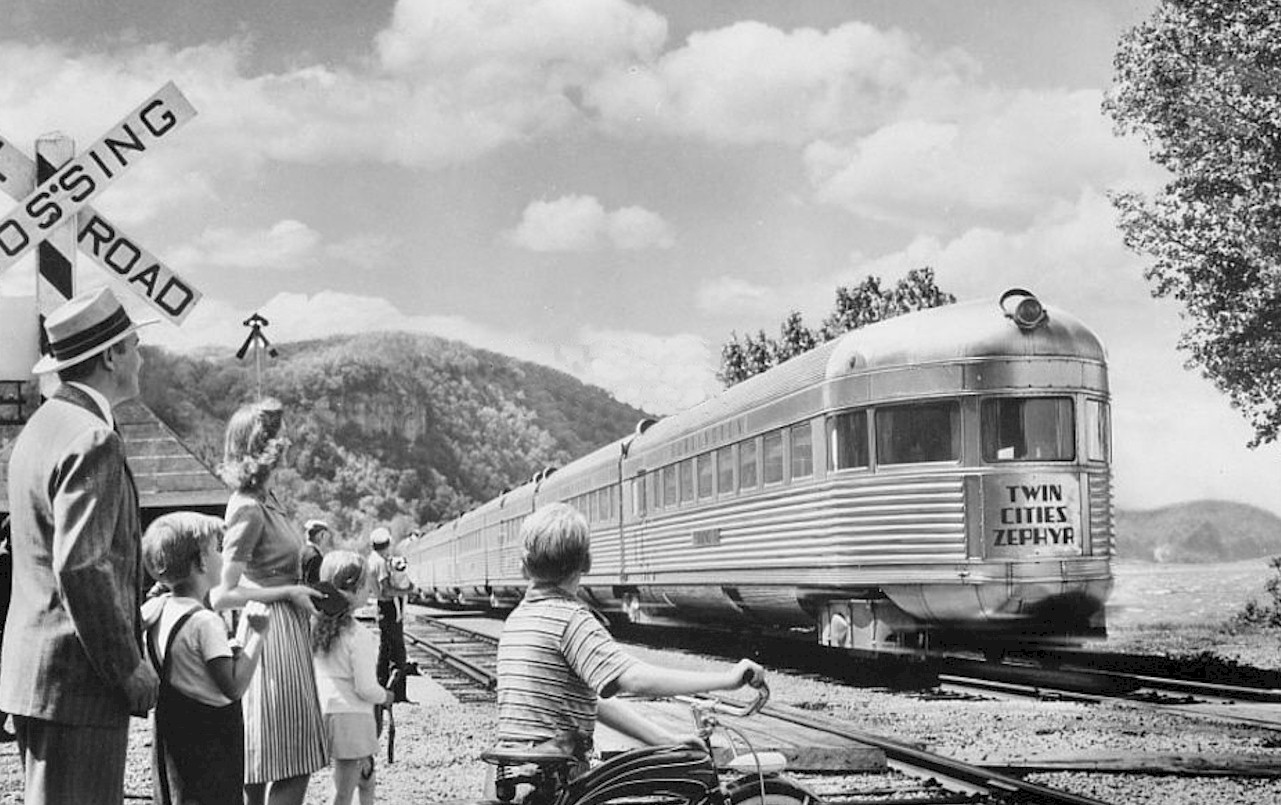
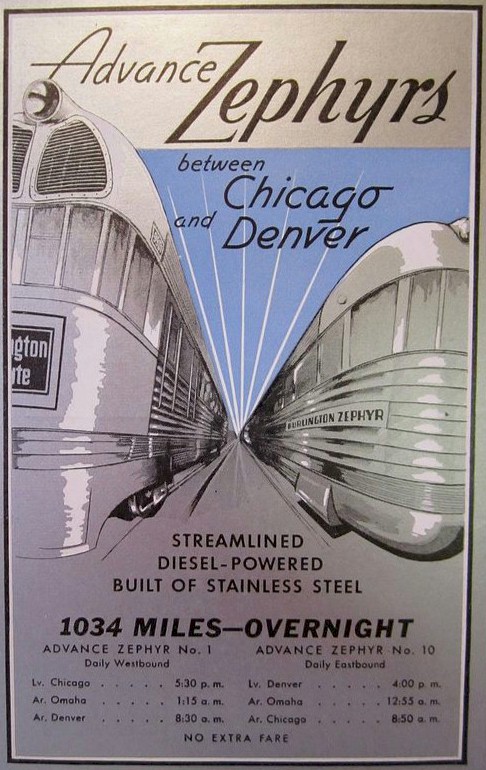
An early promotional postcard for the train. It is billed as the Advance Zephyr. When this card was printed, the train had not yet added any sleeping cars, being described as "coach only--for the present".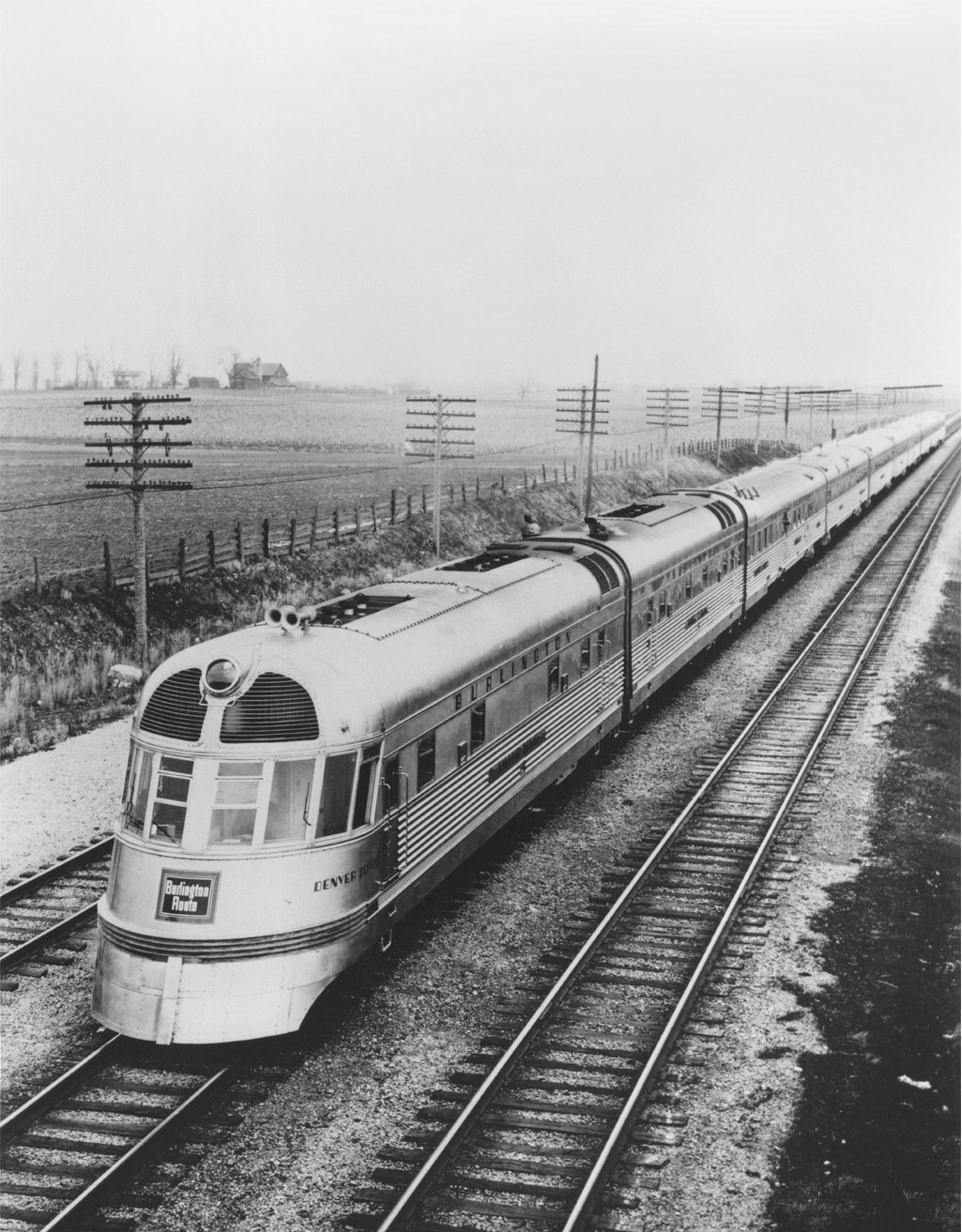
CB&Q 9906A "Silver King" and 9906B "Silver Queen" somewhere between Chicago and Aurora, around October 1936. (Courtesy: Chuck Zeiler).
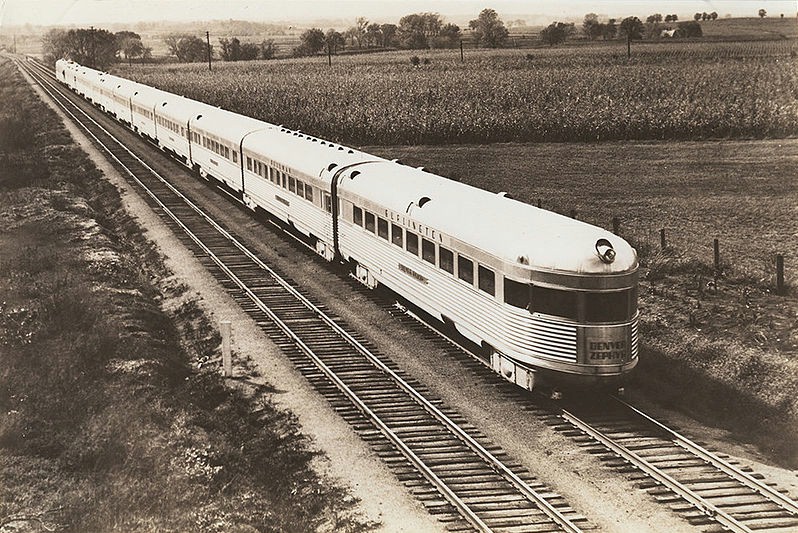
The Denver Zephyr passes through a corn field in 1936.
(Courtesy: Everett L. DeGolyer, Jr. Collection)
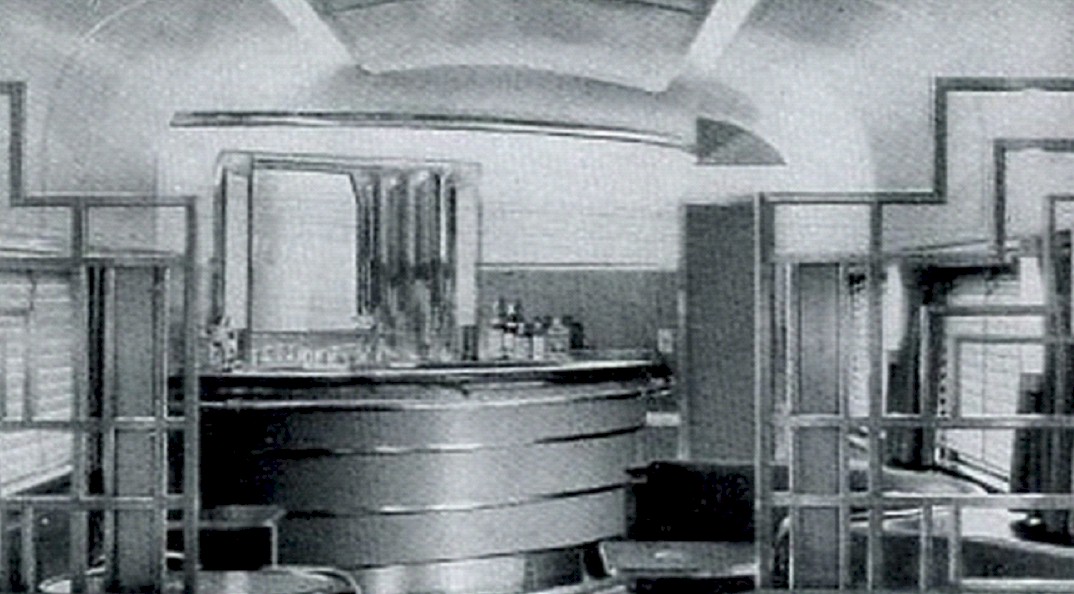
A view of what the Denver Zephyr lounge cars looked like in 1940.
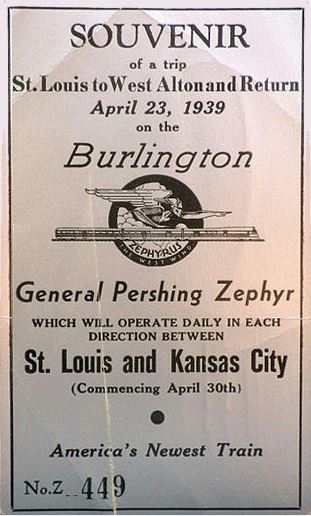
A ticket from the train's trial run between St. Louis and West Alton, Missouri on April 23, 1939. It entered regular service between Kansas City and St. Louis a week later.
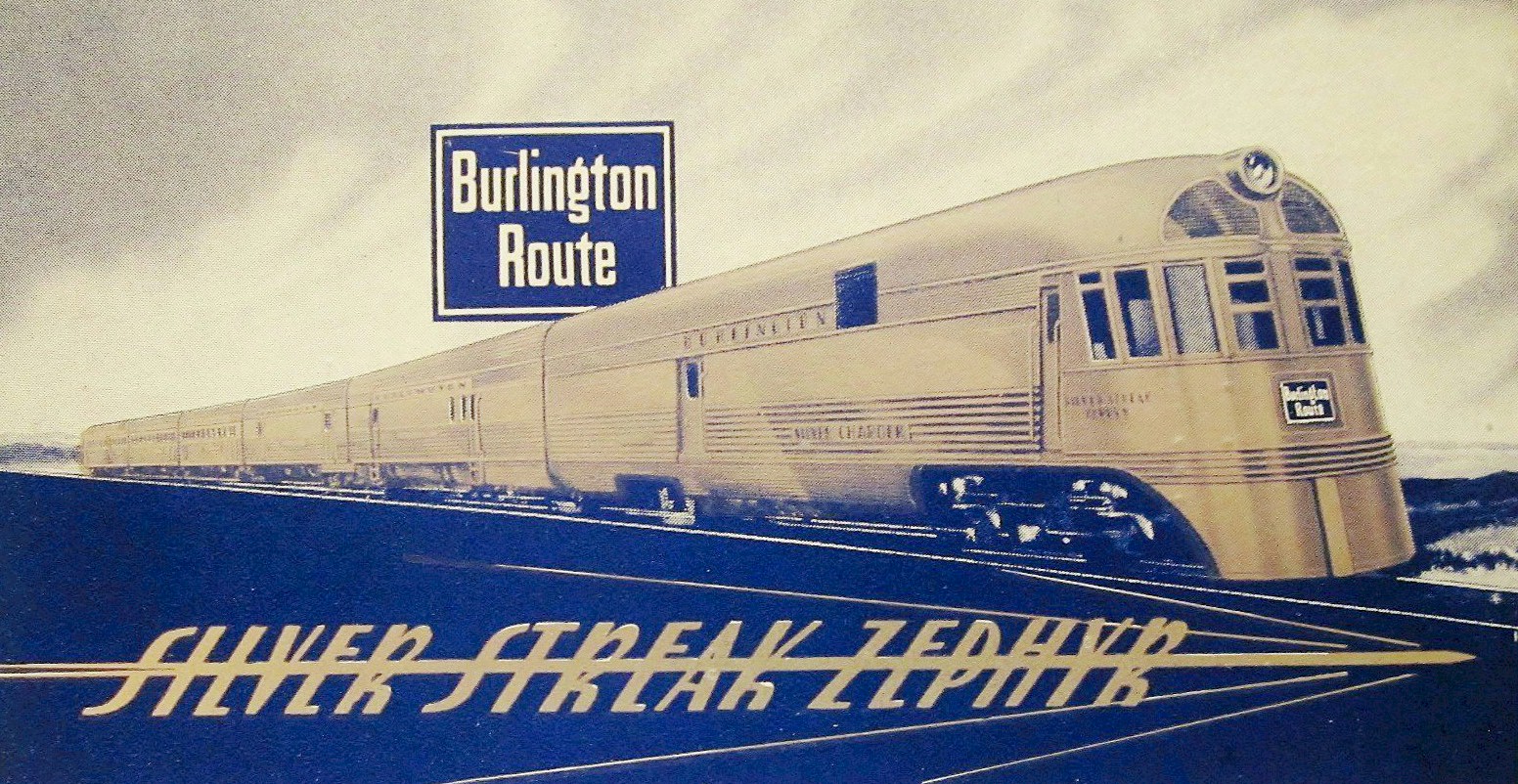

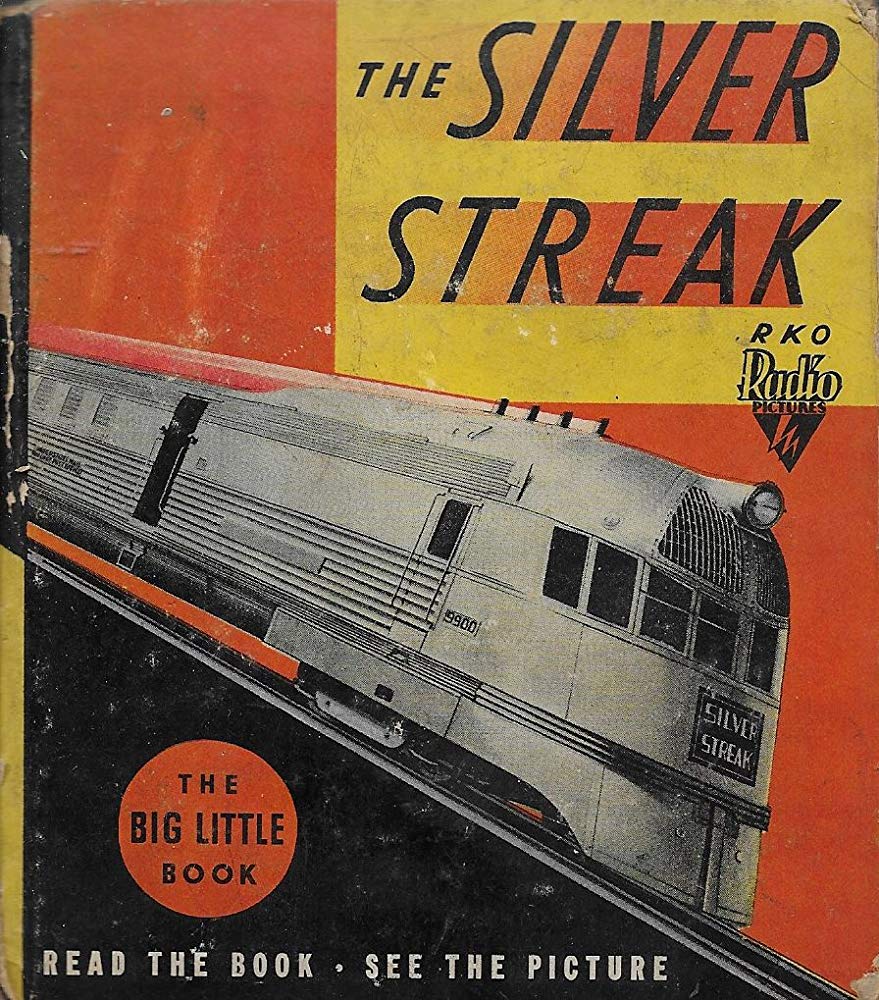
The Silver Streak was published in 1935 by the Whitman Publishing Company of Racine, Wisconsin. Big Little Books were a popular series of children's books during the 1930's. This edition was 154 pages and featured a story about the release of the Pioneer Zephyr. Silver Streak was also the name of a December 3, 1976 movie in which Gene Wilder and Richard Pryor team up to stop a murderous art thief on a runaway train.
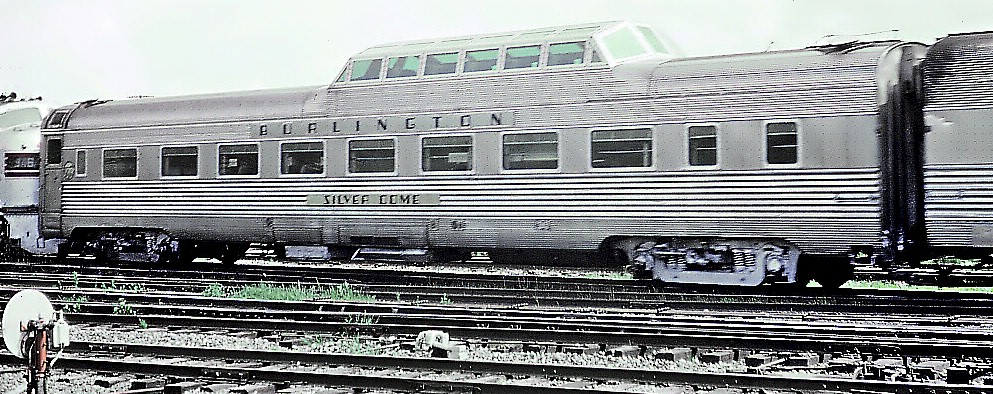
CB&Q’s "Silver Dome" was the first dome coach car ever built.
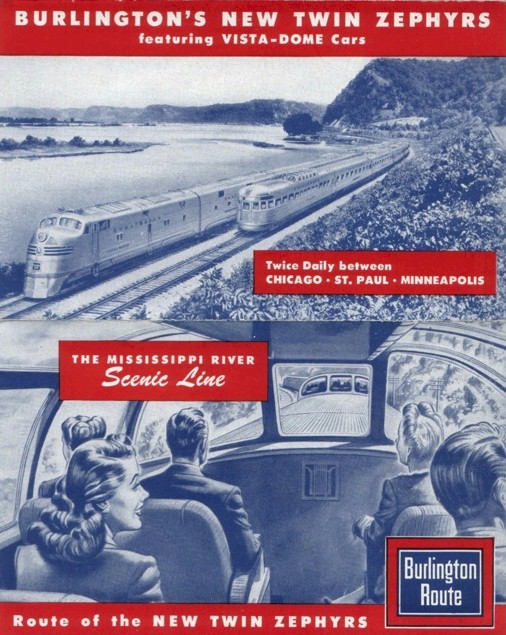

and are available for purchase at www.RailFonts.com.